The Inca Trail is located in the Cusco region of southern Peru, in the Andes surrounding Machu Picchu. Rather than being one single location, the Inca Trail is a network of historic paths, with different access points depending on the route you hike.
For travelers, the two most important starting points are Km 82 at Piscacucho, used for the Classic Inca Trail, and Km 104 near Chachabamba, used for the Short Inca Trail. Both routes eventually approach Machu Picchu through Intipunku, the Sun Gate.
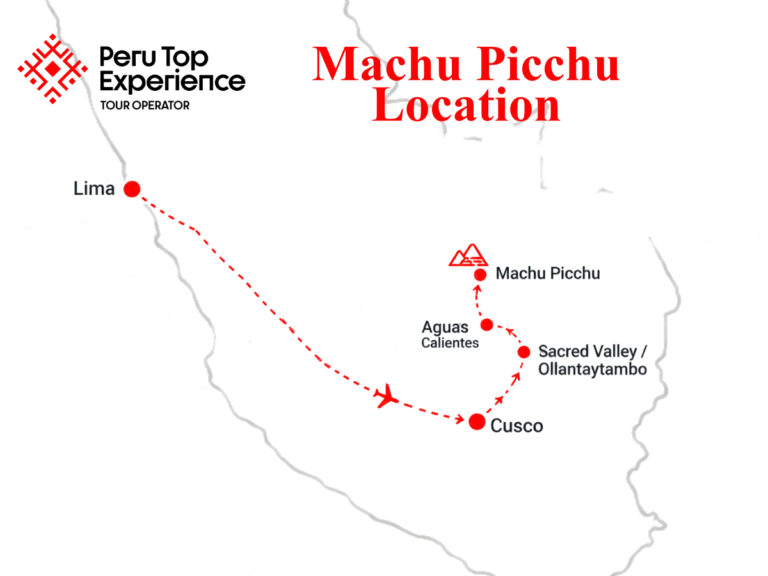
In simple geographic terms, the route looks like this:
Cusco → Sacred Valley → Ollantaytambo → Km 82 or Km 104 → Inca Trail → Intipunku → Machu Picchu
If you are planning to hike the route, you can explore our Inca Trail tours from Cusco.
Where Is the Inca Trail Located?
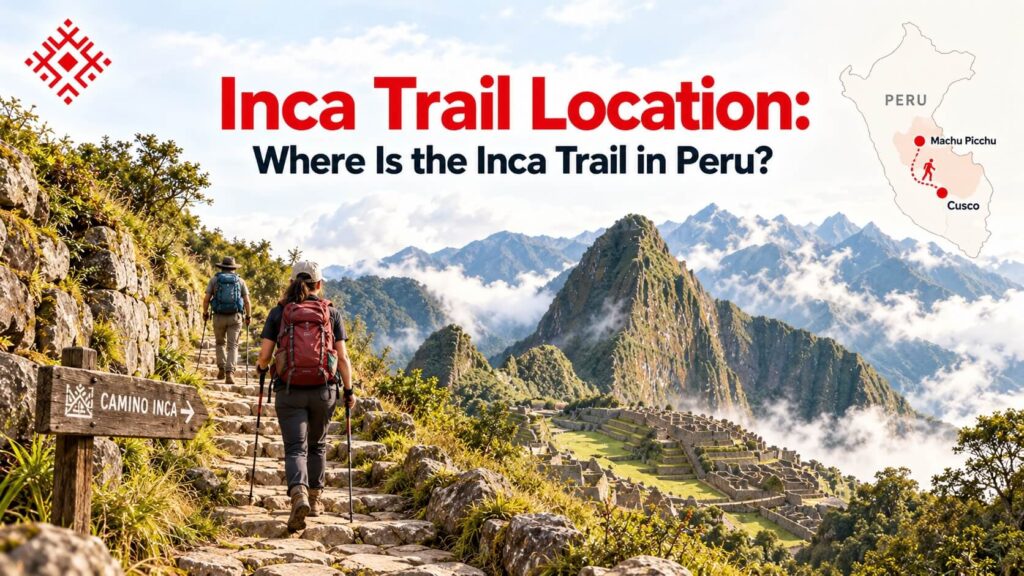
The Inca Trail to Machu Picchu is located in the region of Cusco, Peru, within the Andean landscape surrounding the Historic Sanctuary of Machu Picchu.
The trail crosses mountains, valleys, archaeological sites and cloud forest before reaching Machu Picchu. Its best-known access points are located west of Cusco along the corridor connecting Ollantaytambo with Machu Picchu.
This distinction matters because searching for the “Inca Trail location” on a map does not lead to one single point. Your exact location at the beginning of the trek depends on whether you are hiking the Classic or Short route.
Is the Inca Trail in Cusco?
Yes. The Inca Trail is in the Cusco region, but it does not begin in the city of Cusco itself.
Cusco normally serves as the logistical base for travelers before the trek. From the city, hikers travel toward the Sacred Valley and then continue to the appropriate trailhead.
For the Classic Inca Trail, that trailhead is normally Piscacucho at Km 82. The Short Inca Trail begins farther along the railway corridor at Km 104.
Is the Inca Trail in the Sacred Valley?
The Inca Trail is closely connected geographically and logistically with the Sacred Valley, especially Ollantaytambo and the Urubamba River corridor.
However, the Sacred Valley and the Inca Trail are not the same destination. Travelers commonly pass through or near Ollantaytambo on the way to the trailheads, while the trek itself continues through the protected landscape surrounding Machu Picchu.
If you want to explore this area separately before or after your trek, see our Sacred Valley of the Incas tour.
Inca Trail Location Map: From Cusco to Machu Picchu
The easiest way to understand the location of the Inca Trail is to see it as a journey west from Cusco toward Machu Picchu.
Cusco
↓
Sacred Valley
↓
Ollantaytambo
↓
Km 82 – Piscacucho for the Classic Inca Trail
or
Km 104 – Chachabamba area for the Short Inca Trail
↓
Inca Trail network
↓
Wiñay Wayna
↓
Intipunku – Sun Gate
↓
Machu Picchu
The important point is that Cusco is the base, not the trailhead. The actual trekking portion begins deeper in the Urubamba province, closer to Machu Picchu.
Where Does the Classic Inca Trail Start?
The Classic Inca Trail begins at Km 82 in Piscacucho, in the district of Ollantaytambo, province of Urubamba.
This is the traditional starting point used by travelers hiking the multi-day route to Machu Picchu. From Piscacucho, hikers enter the regulated Inca Trail network and continue through a combination of Andean valleys, mountain passes, archaeological sites and cloud forest.
Where Is Km 82?
Km 82 is located at Piscacucho, approximately 20 km from the town of Ollantaytambo.
The name “Km 82” comes from its position along the railway corridor leading toward Machu Picchu. It is not a neighborhood of Cusco or a destination that most travelers would visit independently; its importance comes from being the conventional entrance to the Classic Inca Trail.
Piscacucho lies beside the Urubamba River, where hikers begin the trek after completing the required entry procedures.
How Do You Get From Cusco to Km 82?
Travelers generally reach Km 82 by traveling from Cusco through the Sacred Valley toward Ollantaytambo and Piscacucho.
The exact pickup point, departure time and transport arrangements depend on the trek operator and itinerary. For organized Inca Trail departures, transportation to the trailhead is normally coordinated as part of the trekking logistics.
You therefore do not start hiking from Cusco. The overland journey from the city takes you to the official access area before the trek begins.
Where Does the Short Inca Trail Start?
The Short Inca Trail starts at Km 104, near the archaeological site of Chachabamba.
This starting point is farther along the Cusco–Machu Picchu railway corridor than Km 82 and provides access to a shorter section of the historic trail.
Although the Classic and Short Inca Trails share the same final destination, their starting locations and access logistics are different.
| Route | Main starting point | Access |
|---|---|---|
| Classic Inca Trail | Km 82, Piscacucho | Road transfer toward the trailhead |
| Short Inca Trail | Km 104, Chachabamba area | Railway access |
Where Is Km 104?
Km 104 is located along the railway line leading toward Machu Picchu, near Chachabamba.
From this point, hikers enter the Inca Trail and climb toward archaeological sites such as Wiñay Wayna before continuing to Intipunku and Machu Picchu.
Because Km 104 is on the railway corridor rather than a normal road-access trailhead, reaching it works differently from reaching Km 82.
How Do You Reach Km 104?
Access to Km 104 is normally coordinated by train.
Travelers board a train heading toward Machu Picchu and get off at the designated Km 104 access point for the trek. From there, the hiking section begins near Chachabamba.
This is one of the biggest logistical differences between the two routes:
Classic Inca Trail: travel by road toward Km 82, then begin trekking.
Short Inca Trail: travel by train toward Km 104, then begin trekking.
Where Does the Inca Trail End?
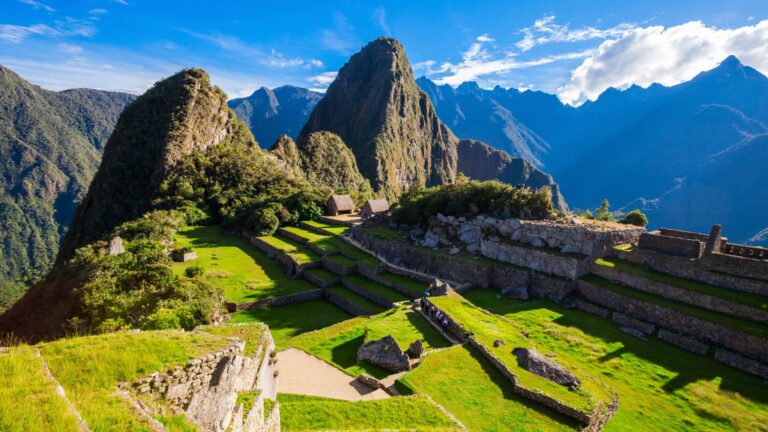
The Inca Trail leads to Machu Picchu.
One of the defining characteristics of both the Classic and Short routes is the final approach through Intipunku, or the Sun Gate, before continuing toward the archaeological site.
This is very different from reaching Machu Picchu by the standard train-and-bus route. Instead of approaching the site from Machu Picchu Pueblo, hikers arrive through the historic trail network.
For other ways to visit the archaeological site, see our Machu Picchu tours.
Where Is the Sun Gate on the Inca Trail?
Intipunku, commonly called the Sun Gate, is located on the approach to Machu Picchu.
It forms one of the final major landmarks of the Inca Trail. Hikers reach Intipunku before descending toward the Machu Picchu archaeological complex.
Its location is important when understanding the Inca Trail geographically: the trail does not simply lead to the nearby town and then transfer travelers to Machu Picchu. The historic route itself approaches the archaeological site through the surrounding mountains.
Does the Inca Trail End at Aguas Calientes?
No. The Inca Trail does not end at Aguas Calientes, also known as Machu Picchu Pueblo.
Aguas Calientes is the town below the Machu Picchu archaeological site and is the main arrival point for travelers using the regular train route.
The Inca Trail follows a different approach. Hikers continue along the trail toward Intipunku and Machu Picchu itself.
Aguas Calientes may still form part of your broader itinerary depending on the specific trek and travel arrangements, but it should not be confused with the destination of the historic hiking route.
What Places Does the Inca Trail Pass Through?
The Inca Trail crosses a remarkable range of environments and archaeological areas between its starting point and Machu Picchu.
On the Classic route, hikers travel from the lower Urubamba Valley into high Andean terrain, cross mountain passes and then descend toward increasingly humid cloud forest as they approach Machu Picchu.
This changing geography is one reason the trail feels very different from a simple point-to-point mountain hike.
Key Locations on the Classic Inca Trail
Some of the most important geographic and archaeological reference points on or around the Classic Inca Trail include:
- Piscacucho (Km 82): the conventional starting point.
- Patallaqta: an important archaeological complex encountered early in the route.
- Wayllabamba: a reference point as the route moves deeper into the mountains.
- Warmiwañusqa: the highest mountain pass on the Classic Inca Trail.
- Pacaymayo: part of the high-altitude section of the route.
- Wiñay Wayna: one of the major archaeological sites close to Machu Picchu.
- Intipunku: the Sun Gate and final major approach to Machu Picchu.
- Machu Picchu: the destination at the end of the trek.
These places also help explain why “Inca Trail location” is better understood as a corridor through the Andes rather than one pin on a map.
The Highest Point of the Inca Trail
The highest point on the Classic Inca Trail is Warmiwañusqa, commonly known in English as Dead Woman’s Pass.
It reaches approximately 4,200 meters above sea level and represents one of the major geographic transitions of the trek.
After crossing the higher Andean sections, the route gradually moves toward lower and more humid environments as it approaches Machu Picchu.
The Short Inca Trail does not cross Warmiwañusqa because it joins the trail much closer to Machu Picchu.
How Far Is the Inca Trail From Cusco?
There is no single useful distance between “Cusco and the Inca Trail” because the trail covers a route rather than one location.
For trip planning, it is more useful to distinguish between Cusco and the starting point of your chosen trek.
The Classic Inca Trail starts at Km 82 near Piscacucho, while the Short Inca Trail starts at Km 104 near Chachabamba. Both are west of Cusco in the direction of Machu Picchu.
Cusco to the Classic Inca Trail Starting Point
The usual geographic sequence is:
Cusco → Sacred Valley → Ollantaytambo area → Piscacucho → Km 82
Transport takes hikers from Cusco toward the official access point. The trek itself begins only after reaching Km 82 and completing the required entry procedures.
This distinction is useful when planning accommodation and acclimatization: staying in Cusco does not mean you are staying next to the Inca Trail.
Cusco to the Short Inca Trail Starting Point
The Short Inca Trail follows a different access pattern:
Cusco → Ollantaytambo area → train toward Machu Picchu → Km 104
Because Km 104 is accessed from the railway corridor, travelers normally reach the hiking entrance by train rather than by driving directly to the trailhead.
From there, the trail passes Chachabamba and continues toward Wiñay Wayna, Intipunku and Machu Picchu.
Can You Visit the Inca Trail Independently?
The regulated Inca Trail to Machu Picchu is not an unrestricted hiking route that travelers can simply enter independently.
Access is controlled, and trekking services operate under the regulations established for the Inca Trail network within the Historic Sanctuary of Machu Picchu. Travelers should arrange the trek through an authorized Inca Trail operator, which coordinates the required access and trekking logistics.
Peru Top Experience is a Cusco-based local tour operator and authorized Inca Trail operator. Working directly with a local operator also means the organization of the trek is handled by the company operating the service rather than through an intermediary.
Why the Starting Point Depends on Your Inca Trail Route
When someone asks, “Where does the Inca Trail start?”, there are two common answers because the route chosen determines the access point.
Choose the Classic Inca Trail and your trek generally starts at:
Km 82 – Piscacucho
Choose the Short Inca Trail and your hike generally starts at:
Km 104 – Chachabamba area
Both ultimately lead toward Machu Picchu, but the hiking time, trail sections and access logistics are different.
That is why identifying your route should come before planning transportation to the trailhead.
Planning Your Inca Trail From Cusco
For most travelers, planning the Inca Trail starts in Cusco, not at Km 82 or Km 104.
First decide which version of the trail fits your trip. Then confirm the corresponding access point, arrange the required trek services and plan enough time in the Cusco region before departure.
The essential geography is simple:
Classic route: Cusco → Sacred Valley → Km 82 → Inca Trail → Machu Picchu.
Short route: Cusco → railway corridor → Km 104 → Inca Trail → Machu Picchu.
If you are comparing options, explore our Inca Trail tours in Peru to see which route best fits your itinerary.