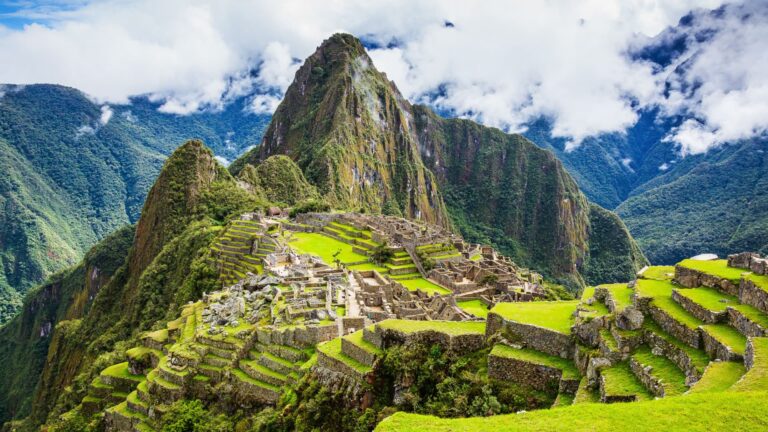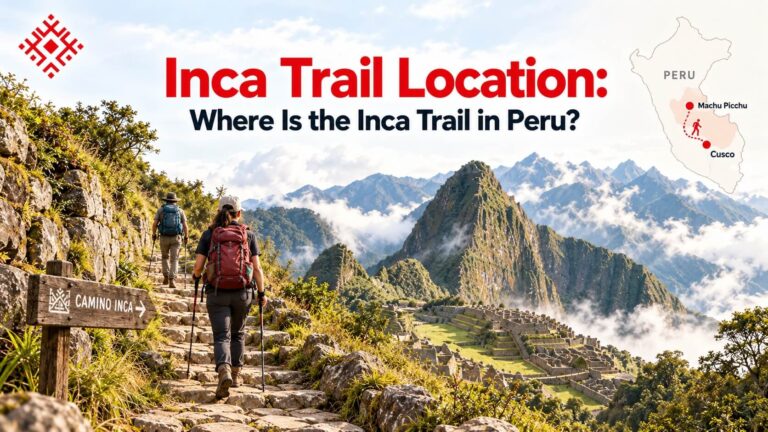


Hiking the Inca Trail is not just about being fit enough to walk for several days. Good preparation also means giving yourself time to acclimatize, training for steep climbs and descents, packing for changing mountain weather, managing your energy and understanding the logistics before you start.
The trail combines high altitude, long stone stairways, mountain passes, archaeological sites and changing environments before reaching Machu Picchu. The better prepared you are before arriving at the trailhead, the more attention you can give to the experience itself rather than preventable discomfort.
These practical tips for hiking the Inca Trail cover what to consider before booking, what to do before arriving in Cusco and how to manage the trek once you are on the trail.
1. Book Your Inca Trail Trek Early
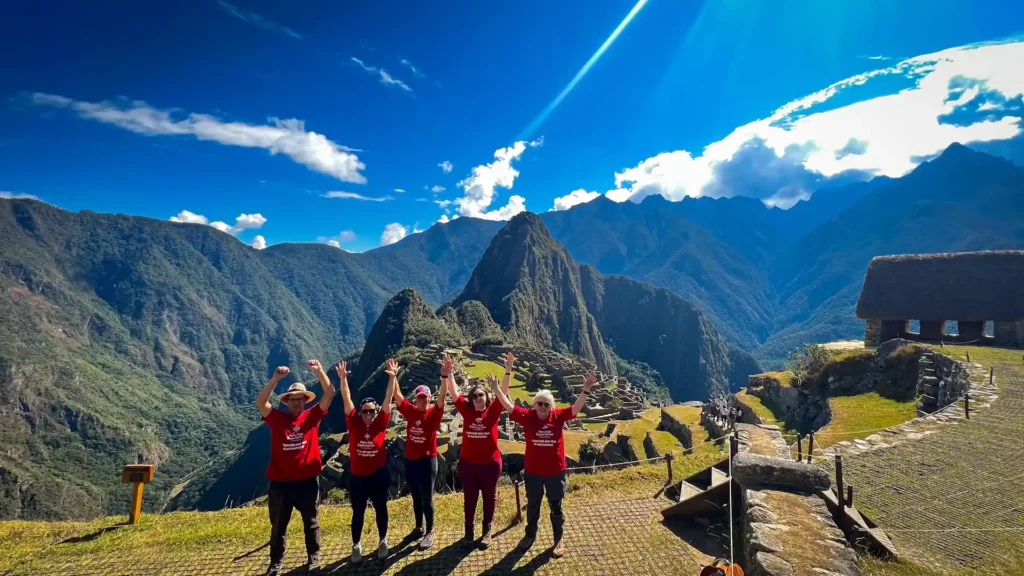
Planning the Inca Trail starts before you pack your hiking boots.
Access to the official Inca Trail network is regulated, and hikers cannot simply arrive at the trailhead and walk independently. Entry is managed through authorized tourism operations, so availability needs to be part of your travel planning from the beginning.
If the Inca Trail is one of the main reasons for your trip to Peru, organize it before building the rest of your Cusco itinerary around it.
You can start by reviewing the different Inca Trail tours available and deciding which type of route fits your schedule and trekking expectations.
Why Inca Trail permits matter
The Inca Trail passes through the protected Historic Sanctuary of Machupicchu, an area with archaeological and environmental conservation rules.
Official access is therefore controlled rather than open-ended. SERNANP currently states that visitors to the protected area must use authorized tour operators.
This means that permit arrangements are not an administrative detail to leave until the last minute. They are part of securing your place on the trail.
Before paying for a trek, make sure you understand how your operator handles access and what information is required from you during the booking process.
Choose an authorized Inca Trail operator
The operator you choose affects much more than the reservation itself.
Your trekking company coordinates the regulated access, guides, support staff and the logistics needed to complete the route. For that reason, authorization should be one of the first things you check when comparing companies.
Peru Top Experience is a local Cusco-based tour operator and an authorized Inca Trail operator. Booking directly with the company operating the experience also gives you a direct point of contact for questions about preparation and logistics.
If you are still comparing route options, our guide to the best Inca Trail tours can help you understand the main alternatives before deciding.
2. Give Yourself Time to Acclimatize Before the Inca Trail
Do not plan to arrive in Cusco and begin a demanding high-altitude trek immediately afterward.
The Inca Trail reaches elevations well above Cusco, and altitude can make normal hiking effort feel considerably harder. Fitness helps you deal with the physical work, but being fit does not mean you are automatically acclimatized.
One of the most useful decisions you can make is to build time at altitude into your itinerary before the trek.
Why altitude makes the Inca Trail harder
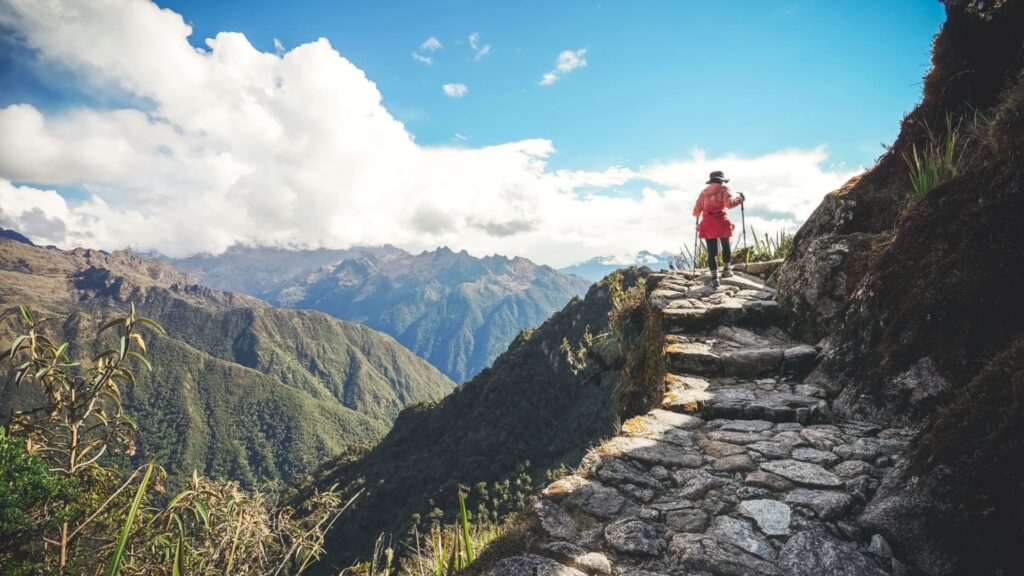
At higher elevations, your body has less oxygen available with each breath than it does at sea level.
That affects hiking because the Inca Trail requires sustained effort while climbing long inclines and stone steps. A pace that normally feels comfortable at home can feel very different in the Andes.
The Classic Inca Trail reaches its highest point at Warmi Wañusqa, commonly known as Dead Woman’s Pass, at approximately 4,215 meters above sea level.
The objective is not to move as quickly as possible. It is to arrive prepared enough to manage the combination of altitude and physical effort.
How to use your days in Cusco before the trek
Treat the days before your hike as part of the preparation.
Avoid creating an itinerary in which you arrive, fill every available hour with demanding activities and then begin the Inca Trail already tired.
Instead, give your body time to adjust to the elevation and pay attention to how you feel.
Easy sightseeing and normal walking around Cusco can help you understand how your body responds before you are several hours into a mountain trek.
If you experience significant or worsening symptoms at altitude, tell your guide rather than trying to push through them.
3. Train for Uphill and Downhill Hiking, Not Just Distance
Walking a long distance on flat ground is useful, but it does not completely prepare you for the Inca Trail.
The route includes repeated climbs, descents, irregular terrain and many stone steps. Your training should therefore resemble the type of effort you will actually encounter.
Whenever possible, include hills, stairs and consecutive hiking days in your preparation.
Build cardiovascular endurance
You do not need to train like a competitive athlete, but you should be comfortable sustaining physical activity for several hours.
Walking, hiking, cycling and other forms of aerobic exercise can help build the endurance needed for long trekking days.
Progressive training is more useful than attempting one extremely hard workout shortly before flying to Peru.
The goal is to arrive with a base level of endurance rather than trying to gain fitness during the trek itself.
Strengthen your legs for climbs and stone steps
The Inca Trail requires repeated uphill movement, so leg strength matters.
Exercises that prepare your legs for climbing stairs, walking uphill and supporting your own body weight over uneven ground can make the trail more manageable.
Whenever possible, train with the footwear and daypack you intend to use in Peru. That makes your preparation more specific and helps you identify problems before the trip.
Practice descending before the trip
Many travelers focus almost entirely on climbing.
Do not ignore the descents.
Long downhill sections can place significant stress on your legs, especially when you are moving down irregular stone steps after already hiking for hours.
Practice controlled downhill walking as part of your training instead of assuming the descent will automatically be the easy part.
4. Break In Your Hiking Boots Before You Arrive in Peru
The Inca Trail is not the place to discover that your new hiking shoes rub your heel.
Whatever footwear you choose, use it repeatedly before your trip. Walk several kilometers in it, take it on hills or stairs and test it with the socks you plan to wear on the trek.
The objective is not simply to make the boots look used. It is to confirm that they remain comfortable after hours of walking.
Pay attention to:
- heel movement;
- pressure on your toes during descents;
- rubbing around the ankle;
- how your socks behave inside the shoe;
- grip on uneven surfaces.
Comfort and fit matter more than buying footwear simply because it is marketed as highly technical.
Do the testing at home, where you still have time to change your setup.
5. Pack for Changing Weather, Not Just the Season
Mountain conditions can change during a single trekking day.
Instead of asking only, “Will I travel in the dry or rainy season?”, prepare for the fact that temperature, wind, sun exposure and rain can vary as you move through different elevations and environments.
SERNANP describes the Inca Trail as an area with a broad temperature range and identifies November through March as the rainy season.
Your clothing system should therefore let you adapt while you walk.
Dress in layers
Several lighter layers are generally more practical than relying on one heavy item.
You may feel cold when starting early in the morning, warm up considerably during an uphill section and need another layer when you stop or reach a more exposed area.
Keep the layers you are most likely to add or remove somewhere accessible.
If changing clothing requires unpacking your entire bag, you will be less likely to adjust when conditions change.
Keep rain protection accessible
Rain gear is only useful if you can reach it before everything else gets wet.
Keep your waterproof layer or rain protection where you can take it out quickly.
The same applies to protection for your backpack or important belongings.
Do not assume that a clear morning guarantees a completely dry trekking day.
Protect important items from moisture
Documents, electronics and anything that needs to remain dry should have another layer of protection inside your backpack.
A backpack cover can help with external rain, but separately protecting important items gives you additional security if moisture enters the bag.
Simple organization before the trek can prevent unnecessary problems later.
6. Keep Your Daypack as Light as Possible
You will appreciate every unnecessary item you decided not to carry once you start climbing.
A daypack should contain what you actually need access to while walking, rather than becoming storage for every item you brought to Peru.
Before the trek, separate your equipment into two categories:
- items you need during the hiking day;
- items that do not need to be on your back while you walk.
Your operator should explain how luggage and porter arrangements work for your specific trek.
What you should carry while hiking
The exact list depends on your program and what your operator provides, but your daypack normally needs to keep personal essentials readily available.
Think in terms of function:
- water and hydration;
- sun protection;
- rain protection;
- an extra clothing layer;
- personal medication;
- small personal essentials;
- items you want immediate access to.
Avoid adding objects “just in case” without considering their combined weight.
A small amount of unnecessary gear does not seem important in your hotel room. It feels very different after several hours of climbing.
Understand what porters carry
Porters are an important part of the logistics on the traditional multi-day Inca Trail, but you should never make assumptions about what will be carried for you.
Ask your operator before departure:
- what personal luggage can be transported;
- what you must carry yourself;
- whether there are weight restrictions;
- how your belongings should be packed;
- which items you will not have access to during the day.
Knowing this in advance makes packing much easier.
7. Use Trekking Poles on the Long Descents
Trekking poles can be particularly useful when descending long sections of stairs or uneven trail.
They can provide additional balance and help you control your movement instead of allowing gravity to dictate your pace.
The key is to learn how to use them before the trip.
Practice adjusting the length and using them both uphill and downhill. If the first time you handle your poles is on the Inca Trail, they may feel more distracting than helpful.
You should also confirm current trail requirements for pole tips with your operator before departure so that your equipment complies with conservation rules.
8. Walk at a Sustainable Pace from the Beginning
The fastest hiker in your group is not setting the pace your body has to follow.
At altitude, trying to keep up with someone else can use energy unnecessarily early in the day. A steady pace that you can maintain is usually more useful than repeatedly hiking fast and then stopping because you are exhausted.
Start more conservatively than you think you need to.
Pay attention to your breathing, use short stops when necessary and listen to your guide’s instructions.
This becomes particularly important on long uphill sections where maintaining a rhythm is more efficient than treating the climb as a race.
Your objective is not to “win” the trail.
It is to arrive at Machu Picchu with enough energy to appreciate where you are.
9. Eat and Hydrate Consistently During the Trek
Do not wait until you feel completely depleted before thinking about food or water.
Long hiking days require consistent energy and hydration, particularly when combined with elevation.
Drink regularly throughout the day and eat the meals and snacks available as part of your trekking plan.
At the same time, avoid treating generic internet advice as personalized medical guidance. Individual hydration and nutrition needs differ.
If you have a medical condition, dietary restriction or specific concern about hiking at altitude, discuss it with an appropriate health professional before traveling and inform your tour operator of relevant requirements.
10. Prepare for the Hardest Day Before You Reach It
One reason the Inca Trail can feel intimidating is uncertainty.
Knowing that a difficult climb is coming allows you to approach it differently.
On the Classic Inca Trail, Warmi Wañusqa — Dead Woman’s Pass — is the highest point of the route at around 4,215 meters.
For many hikers, the sustained climb combined with the altitude makes this one of the most demanding parts of the trek.
That does not mean you should spend the previous day worrying about it. It means you should understand the challenge and manage your effort accordingly.
What to expect at Dead Woman’s Pass
The difficulty comes primarily from sustained uphill hiking at high altitude rather than from technical climbing.
Expect your normal walking speed to change as you gain elevation.
Use a rhythm you can sustain, stop when necessary and avoid using other hikers as a measure of how quickly you “should” be moving.
Reaching the pass is a major moment on the trek, but it is not the end of the day’s physical effort.
Save energy for the descents
After a major climb, it is tempting to assume that everything afterward will feel easy.
Long descents can be tiring in a different way.
Your legs need to control every step, often over irregular stone surfaces. Keep enough energy and concentration for the downhill sections rather than using everything you have on the climb.
This is also where the downhill training you did before the trip becomes useful.
11. Don’t Rush Through the Archaeological Sites
The Inca Trail is more than a multi-day physical challenge ending at Machu Picchu.
The route itself is part of the historical experience.
The official Inca road network within the Machupicchu archaeological area connects numerous archaeological sites and follows routes through a protected cultural landscape.
Give yourself time to listen to your guide and understand what you are walking through.
When you focus exclusively on distance, speed or reaching the next campsite, you miss part of what makes this trek different from an ordinary mountain hike.
The archaeological sites along the trail provide context for the road, the landscape and eventually your arrival at Machu Picchu.
Take photos, but also give yourself a few moments to experience the sites without seeing everything through a screen.
12. Know What Your Trek Includes Before You Start
Many problems on trekking trips come from expectations that were never clarified.
Before leaving Cusco, you should know what your program includes, what equipment is provided and what remains your responsibility.
Do not rely on what a friend received with another company or what a traveler described in an old blog post. Ask about your specific departure.
Ask what equipment is provided
Confirm what the operator supplies and what you need to bring or rent.
Depending on the program, this may involve camping equipment, sleeping arrangements, trekking poles or other items.
Do not assume.
Getting a clear packing list directly from your operator prevents both overpacking and arriving without something essential.
Understand porter and luggage arrangements
Confirm how your personal luggage will be handled before the trek begins.
Ask about permitted weight, the type of bag required and which items remain with you during the hiking day.
This also helps you plan what to leave safely in Cusco rather than carrying belongings you will not use on the trail.
Confirm the Machu Picchu logistics at the end of the trek
The hike may end at Machu Picchu, but your travel logistics do not.
Before departure, understand what happens after reaching the archaeological site.
Know what your itinerary includes regarding the Machu Picchu visit, onward transportation and your return toward Cusco.
Having this information beforehand means you can focus on the experience instead of trying to solve logistics at the end of several days of trekking.
You can also review Peru Top Experience’s Machu Picchu tours if you are comparing the Inca Trail with other ways of visiting the archaeological site.
13. Choose Your Inca Trail Operator Carefully
Choosing an Inca Trail operator should not come down to comparing a single headline price.
The company is responsible for coordinating an experience that takes place inside a regulated protected area and involves permits, guides, support logistics and communication before the trek.
SERNANP requires visitors to use authorized tourism operators within the Historic Sanctuary of Machupicchu.
Authorization should therefore be a basic requirement rather than an optional extra.
Why booking with a direct local operator matters
A direct operator is the company actually responsible for organizing the service rather than simply reselling another company’s departure.
That gives you a clearer line of communication when you need answers about preparation, itinerary details, equipment and logistics.
Peru Top Experience is based in Cusco and operates tours directly rather than positioning itself as an intermediary. The company is also an authorized Inca Trail operator.
For travelers preparing for a complex multi-day trek, direct communication can make it easier to clarify important details before arriving in Peru.
What to check before booking
Before choosing a company for the Inca Trail, check:
- whether it is authorized to operate on the trail;
- exactly what the itinerary includes;
- what trekking and camping equipment is provided;
- how personal luggage and porter arrangements work;
- what you need to bring yourself;
- how Machu Picchu access is handled within the program;
- what happens at the end of the trek;
- who you can contact if you have questions before departure.
Clear information before booking is a good indication of what you can expect once the trip begins.
If the Inca Trail is part of your Peru plans, explore our Inca Trail tours and speak directly with Peru Top Experience about the route, preparation and logistics.
Final Tips Before Hiking the Inca Trail
The most important tips for hiking the Inca Trail are simple: book early, acclimatize before starting, train for hills and stairs, break in your footwear, pack light, prepare for changing weather and hike at a sustainable pace.
Just as importantly, understand the logistics before you arrive at the trailhead.
The Inca Trail is demanding because it combines altitude, repeated climbs and descents, multi-day hiking and mountain conditions. But good preparation removes much of the unnecessary uncertainty.
Arrive in Cusco with your trek organized, give yourself time to adapt to the elevation and treat the trail as more than a race toward Machu Picchu. The road, archaeological sites and changing Andean landscapes are part of the experience too.