

The fruits of the Peruvian rainforest are one of the most direct ways to understand the Amazon: colors you won’t see anywhere else, intense aromas, and flavors that range from sweet and creamy to sharp and acidic. Walking just a few meters through the Belén Market in Iquitos or a fair in Tarapoto brings you face-to-face with fruits of improbable shapes, sold alongside juices and ice creams that local families have prepared for generations.
The rainforest covers nearly 60% of Peruvian territory and concentrates a large portion of its biodiversity. In this guide, you will discover 20 fruits—their names, characteristics, and culinary uses—and learn which ones are truly Amazonian, what is known (and what isn’t) about their health properties, how they are consumed, and where they are grown. It is useful whether you are planning a trip or simply want to know what people eat in the Amazon.
What Characterizes the Fruits of the Peruvian Rainforest?
There is no single definition, but certain traits recur consistently: enormous variety, intense flavors, and a close relationship with the forest and rivers.
The Biodiversity of the Peruvian Amazon
The Peruvian Amazon brings together very distinct environments: terra firme forests, floodable riverbanks, aguajales (palm swamps dominated by aguaje palms), and high jungle leading up into the Andes. Each environment favors different fruits. Many species grow wild, while others have been domesticated by Amazonian peoples over centuries.
These environmental differences explain why you can find wildly different fruits on a single trip. During a journey through the low jungle of Loreto, it is easy to encounter aguaje, camu camu, or huasaí, whereas dragon fruit, passion fruit, or pineapple appear in the high jungle and cloud forest. Peru is one of the most biodiverse countries in the world, and the Amazon contributes heavily to that record with thousands of plant and animal species—many of which remain underutilized. This wealth also comes with responsibility: getting to know these fruits is the first step toward appreciating and protecting them.
What Distinguishes Amazonian Fruits from Other Peruvian Fruits?
Fruits from the coast and the Andes usually reach the entire country and international markets. Amazonian fruits, by contrast, are mostly consumed near where they grow because they ripen quickly and spoil easily. The table below summarizes the key differences.
Another major difference is their connection to the forest. Many Amazonian fruits come from trees and palms that are part of complex ecosystems, where animals like monkeys, birds, and fish disperse their seeds. Eating Amazonian fruit is thus also a way of engaging with the region’s ecology. Furthermore, several of these fruits are commercialized in formats rarely seen elsewhere: frozen pulps, thick beverages, and artisanal ice creams. While some are now exported, they remain, to a large extent, fruits that are discovered while traveling. This closeness between place and flavor is what makes them so special for curious travelers.
| Trait | Amazonian Fruits | Coastal and Andean Fruits |
|---|---|---|
| Flavor | Highly acidic, aromatic, or oily | Sweeter and more familiar |
| Texture | Fibrous, gelatinous, or fatty pulp | Firm or juicy pulp |
| Shelf Life | Spoil within a few days | Withstand transport better |
| Market Presence | Local and regional | National and export |
| Plant Origin | Many forest trees and palms | Cultivated fruit trees |
Wild, Native, and Cultivated Fruits: Main Differences
A wild fruit grows without human intervention, such as many palm fruits. A native fruit originates from the region, even if it is cultivated today. A cultivated fruit is planted and managed on farms, and can be either native (like camu camu) or introduced from other continents (like star fruit). As you will see below, not all fruits on this list are native to the Amazon.
Understanding these distinctions helps explain why some fruits are available almost year-round while others appear for only a few weeks. Wild fruits depend on the forest and rain cycles; cultivated ones can be planned and produced in larger volumes. Many species exist in an intermediate space: nurtured in home gardens, favored within the forest, or planted alongside other trees. This flexible relationship between human management and nature is characteristic of the Amazon and forms part of its agrobiodiversity. For travelers, it offers a helpful tip: when you spot a fruit at a market, ask if it is wild or cultivated—the answer often reveals a fascinating story.
The Importance of Fruits in Gastronomy and Local Food
In the rainforest, fruit is daily food, an ingredient in drinks, a base for ice creams, and a vital source of income for families selling them in markets and along roadsides. Some palms also yield fibers, oils, and leaves, making their value extend far beyond the fruit itself.
Beyond culinary uses, fruits play a social role: they are central to fairs, celebrations, and family exchanges. In many communities, knowing when each fruit ripens shapes the calendar of activities, from fishing to harvesting. In Amazonian cities, markets gather producers who arrive by boat from riverside communities, and exploring them is one of the best ways to experience the region. If you have the chance, go early in the morning—that is when variety is at its peak and you’ll catch fruits that disappear later in the day.
20 Fruits of the Peruvian Rainforest You Should Know
Here are the 20 fruits on our list, including their scientific names, origins, flavors, and primary uses. Detailed descriptions for each follow below.
| Fruit | Scientific Name | Origin | Flavor | Key Use |
|---|---|---|---|---|
| Aguaje | Mauritia flexuosa | Amazonian | Acidic and oily | Aguajina, ice creams |
| Camu camu | Myrciaria dubia | Amazonian | Extremely acidic | Refrescos, pulp |
| Cocona | Solanum sessiliflorum | Amazonian | Acidic | Juices, chili salsa |
| Yellow Dragon Fruit | Selenicereus megalanthus | Andes & High Jungle | Sweet | Fresh consumption |
| Caimito (Star Apple) | Pouteria caimito | Amazonian | Sweet | Fresh consumption |
| Amazonian Zapote | Matisia cordata | Amazonian | Sweet | Fresh, juices |
| Pacae (Ice Cream Bean) | Inga edulis | Amazonian | Mildly sweet | Fresh consumption |
| Sacha Inchi | Plukenetia volubilis | Amazonian | Roasted seed | Oil, snacks |
| Aguaymanto (Goldenberry) | Physalis peruviana | Andean | Sweet and tart | Jams, sauces |
| Lúcuma | Pouteria lucuma | Andean | Sweet and mealy | Ice creams, desserts |
| Macambo | Theobroma bicolor | Amazonian | Roasted seed | Snacks, preparations |
| Ungurahui | Oenocarpus bataua | Amazonian | Mild and oily | Drink, oil |
| Taperibá (Hog Plum) | Spondias mombin | Amazonian | Tart and aromatic | Juices, ice creams |
| Mamey | Mammea americana | Neotropical, introduced | Sweet and aromatic | Fresh, juices |
| Chambira | Astrocaryum chambira | Amazonian | Mild | Fruit and fiber |
| Huasaí (Amazonian Açaí) | Euterpe precatoria | Amazonian | Mild, slightly earthy | Drink, bowls |
| Copoazú (Cupuaçu) | Theobroma grandiflorum | Amazonian | Tart and aromatic | Juices, desserts |
| Carambola (Star Fruit) | Averrhoa carambola | Introduced from Asia | Juicy and tart | Fresh, juices |
| Maracuyá (Passion Fruit) | Passiflora edulis | South American | Tart and aromatic | Drinks, sauces |
| Golden Pineapple | Ananas comosus | Commercial variety | Very sweet | Fresh, juices |
Aguaje: An Emblematic Fruit of the Amazon
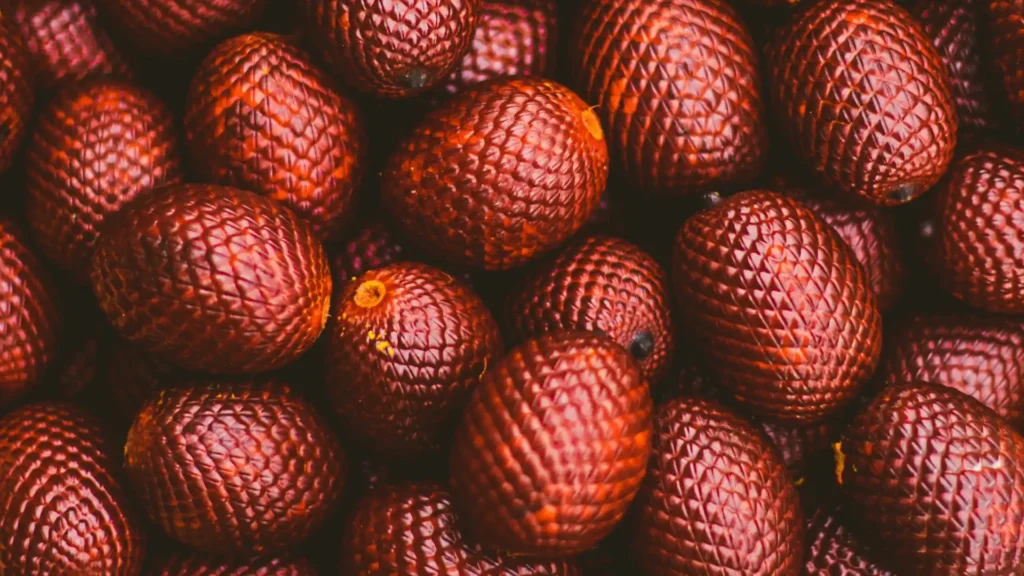
Aguaje (Mauritia flexuosa) is the fruit of one of the tallest and most abundant palms in the Amazon, growing over 30 meters high and forming vast swamps called aguajales in flooded areas. Each egg-sized fruit is covered in reddish-brown scales that protect a layer of bright yellow-orange pulp. The flavor is tangy, slightly sweet, and features a dense, oily texture surrounding a hard seed.
To eat it, the fruit is soaked in warm water until the pulp softens; the scales are then peeled away and the flesh scraped off. It is used to prepare aguajina (a cold, refreshing drink blended with water and sugar), as well as ice creams, popsicles, and sweets. It is one of the top-selling fruits in the markets of Iquitos and Pucallpa. It also plays a crucial ecological role: aguaje swamps provide food for monkeys, birds, and fish, which is why harvesting the fruit by climbing the palm rather than cutting it down is vital for forest conservation.
Beyond the kitchen, aguaje is a cornerstone of Amazonian life. Aguaje wetlands store massive amounts of water and carbon, sheltering macaws, monkeys, tapirs, and fish that feed on fallen fruits—leading many communities to view them as natural supermarkets. Only female palms bear fruit, so cutting them down to harvest destroys future yields. In markets, it is sold ready-to-eat or green to ripen at home over a few days. If it’s your first time, start with a cold aguajina: it is the signature flavor of Iquitos and a welcoming entry point into Amazonian gastronomy.
Camu Camu: Renowned for Its Vitamin C Content
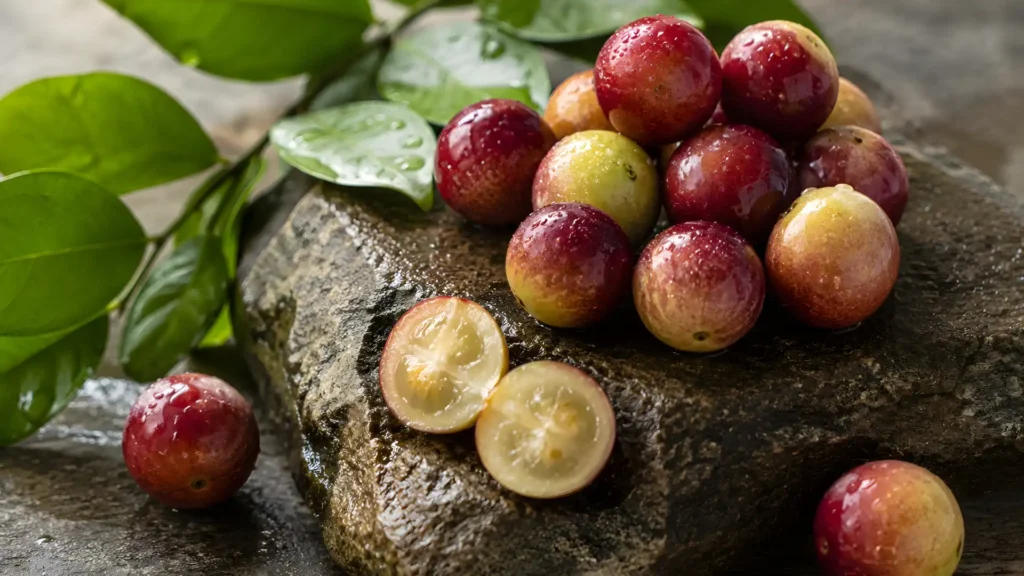
Camu camu (Myrciaria dubia) is a low shrub native to the flooded banks of Amazonian rivers and lakes, now also cultivated in Loreto and Ucayali. Its fruit is a round berry measuring two to three centimeters across—green when young and shifting from deep red to dark purple as it ripens—housing an intensely tart pulp with a rich fruity aroma.
It is famous for its vitamin C concentration, which published analyses show to be far higher than that of citrus fruits, though exact levels vary by maturity, origin, and processing method. It is rarely eaten raw; instead, it is diluted in juice, sweetened in jams and ice creams, or sold as frozen pulp and powder. Those with sensitive stomachs should start with small amounts due to its sharp acidity. It remains one of the most widely recognized Amazonian exports.
Camu camu illustrates how a wild riverbank fruit can turn into a valuable commercial crop. In the floodplain zones of Loreto and Ucayali, farmers plant it along shorelines where the bushes spend part of the year submerged, producing fruit once water levels recede. Harvesting is done by hand, and the fruit must be processed quickly to prevent spoiling—hence its conversion into frozen pulp or powder. First-timers are often struck by its acidity, making sweetened juices or ice creams the best way to enjoy it. If buying powder, look for 100% pure fruit with no added sugars or additives, and store it in a cool, dry place.
Cocona: Tart Flavor and Culinary Uses
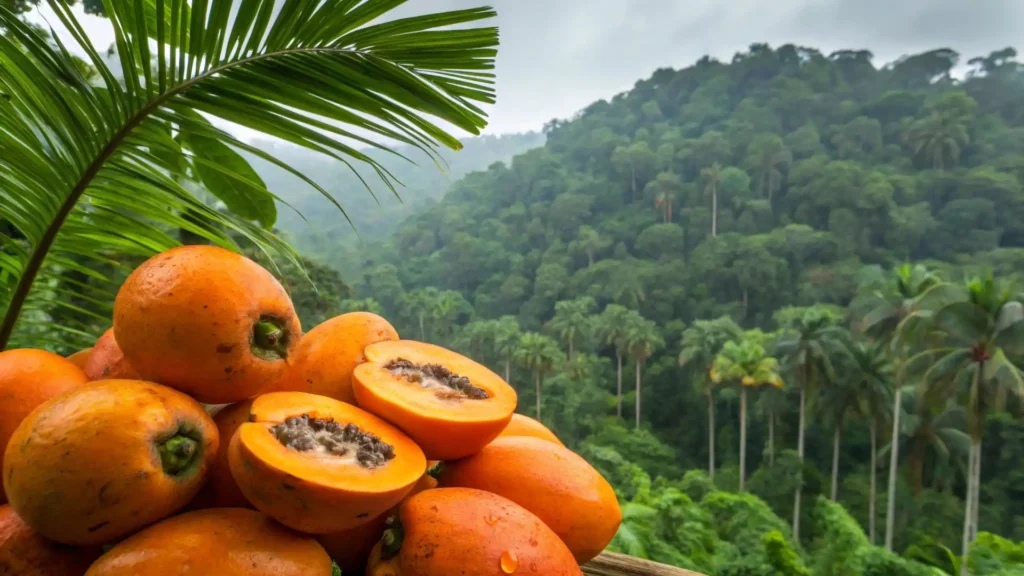
Cocona (Solanum sessiliflorum) belongs to the nightshade family alongside tomatoes and potatoes. It is recognized by its bright yellow-orange skin, covered in a fine fuzz that washes away easily. Round or oval in shape, it features juicy pulp filled with small seeds and delivers a fresh, acidic flavor reminiscent of a cross between a tomato and a citrus fruit. It is widely grown in home gardens and small farms across the rainforest.
In Amazonian cooking, cocona is remarkably versatile: it is blended into juices, cooked into jams, and serves as the main ingredient in ají de cocona—a spicy salsa mixed with herbs and chili peppers that accompanies river fish, cassava, and grilled meats. Its sharp acidity helps cut through rich, fatty dishes. If traveling to the Amazon, be sure to request ají de cocona with grilled fish; it is one of the region’s classic pairings.
Cocona carries a long agricultural heritage: Amazonian indigenous groups have cultivated it since long before European arrival, selecting varieties by size, shape, and flavor. Today, varieties range from small, round fruits to larger, elongated ones. As a fast-growing plant that fruits in under a year, it is ideal for family plots. In the kitchen, the pulp can be sauteed to add tartness to stews or used raw in salsas. To make ají de cocona at home, dice the fruit with hot peppers, cilantro (or jungle cilantro / sacha culantro), and a pinch of salt, then serve over boiled cassava or fish.
Yellow Dragon Fruit: Characteristics and Consumption
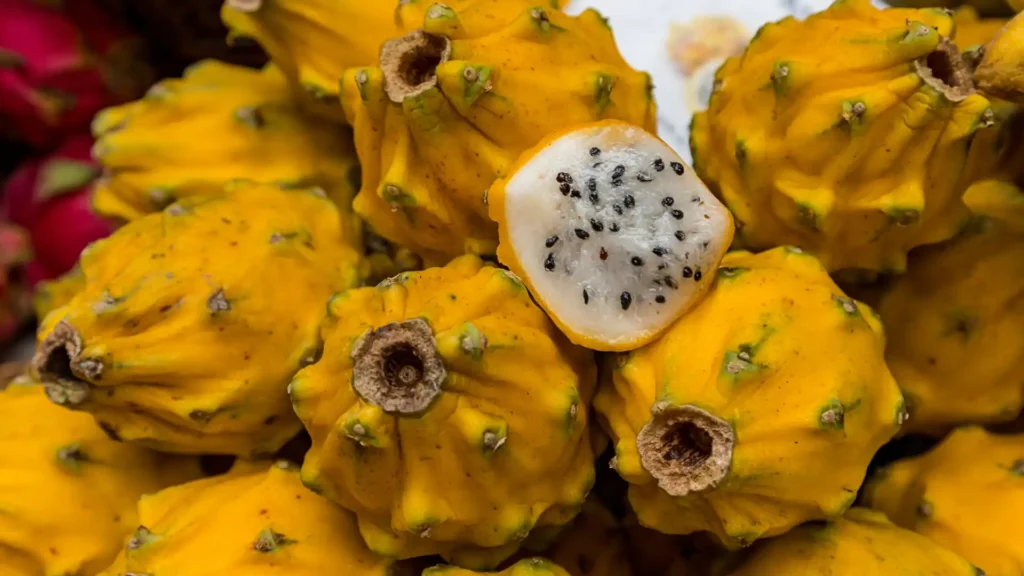
Yellow dragon fruit (Selenicereus megalanthus) is the fruit of a climbing cactus that grows over trees and walls in warm valleys of the Andes and the high jungle. Its bright yellow skin has small spines that drop off as it ripens or during cleaning. Inside, the white, translucent, and juicy pulp contains tiny, edible black seeds.
Its flavor is sweet, delicate, and deeply refreshing, with a texture similar to kiwi. The most common way to eat it is to chill it, slice it in half, and scoop out the pulp with a spoon, though it is also blended into juices or added to fruit salads and desserts. When picking one at a market, look for uniform color and firm skin. If you purchase one with soft spines still attached, use gloves or a cloth when handling it.
Yellow dragon fruit is highly prized for its balance of sweetness and hydration, growing predominantly in high jungle zones where the climate is warm but not oppressive. Unlike the red dragon fruit more common in international trade, the yellow variety is typically smaller with sweeter flesh. Its gentle flavor makes it a fantastic addition to fruit bowls or yogurt breakfasts, pairing nicely with citrus fruits like lime or lemon. To store it, keep it in the refrigerator and consume within a few days—once cut, it loses freshness rapidly.
Caimito: A Sweet-Pulped Fruit
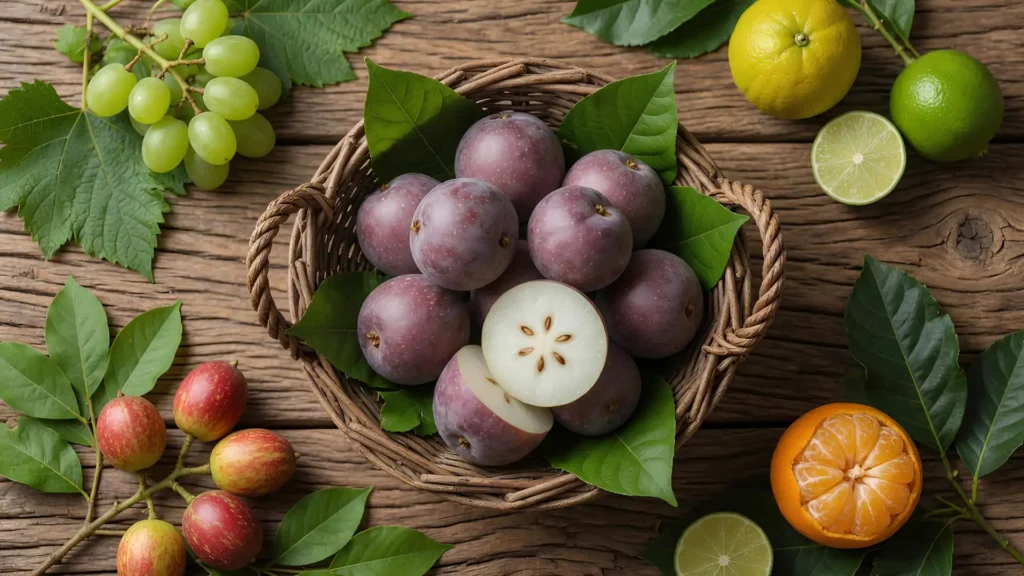
Caimito (Pouteria caimito) comes from an Amazonian tree producing round fruits between five and ten centimeters in size. Its smooth skin turns from bright green to vibrant yellow as it matures. Inside lies a white, translucent, gelatinous pulp that is perfume-like and sweet, holding one to four dark seeds. Because unripe fruit and skin contain sticky latex, it should only be consumed when fully ripe.
To enjoy it, cut the fruit in half and scoop out the pulp with a spoon, or press it for juices and ice creams. It is favored by those who prefer soft, sweet notes over the sharp acidity of other Amazonian fruits. Commonly sold in local markets, it is a staple in family orchards. Trying an unripe caimito will leave a sticky latex residue on your lips, so always wait until the fruit yields gently to pressure.
Caimito belongs to the Sapotaceae family (the same family as lúcuma) and is known as abiu in Brazil. It shares that characteristic smooth texture and delicate sweetness with its relatives. In the rainforest, it grows in home gardens and along forest borders, producing fruit seasonally. Its clean sweetness—free of heavy acidity—makes it an immediate favorite for newcomers. Select fruits with solid yellow skin and no green patches, and consume them promptly as ripe caimitos spoil quickly.
Amazonian Zapote: Texture, Flavor, and Characteristics
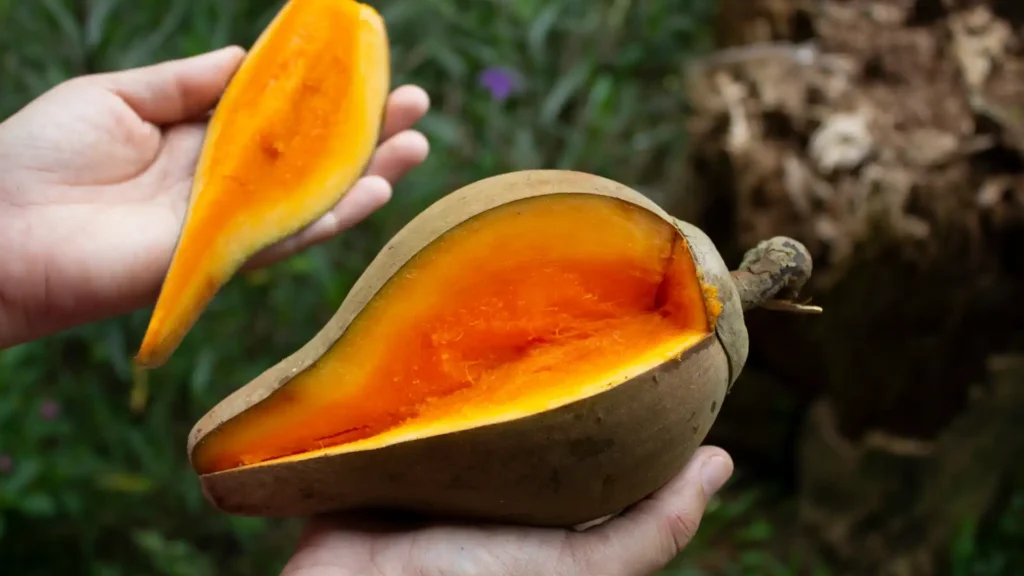
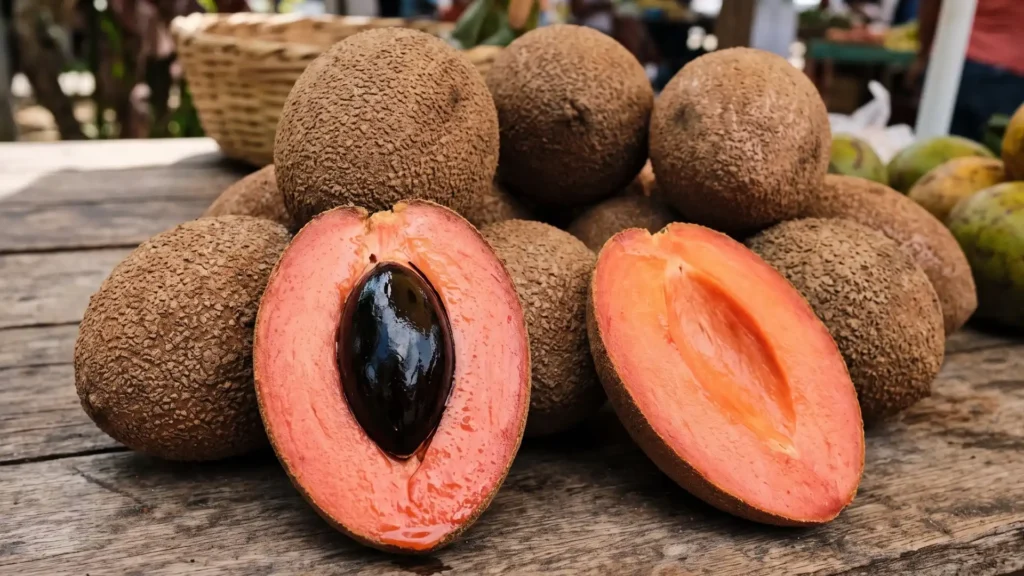
Amazonian zapote (Matisia cordata), locally known as chupa-chupa, grows on large trees native to the western Amazon basin. It produces large fruits spanning 10 to 15 centimeters, covered in a fuzzy, brown outer rind. Inside, the deep orange, fibrous pulp is intensely aromatic and surrounds several large seeds. Its sweet taste echoes other rich, creamy tropical fruits.
It is eaten fresh by cutting it open and sucking the fibrous pulp off the seeds, or blended with water and sugar to create juices and cold drinks. The name can cause confusion, as other unrelated fruits in Latin America share the name “zapote” (such as Mexican mamey sapote or sapodilla). When buying Amazonian zapote, choose fruits that yield slightly to pressure and emit a sweet fragrance; hard ones need more time to ripen.
The Amazonian zapote tree can reach over 15 meters in height and has been cultivated in rainforest gardens for generations. Fruits ripen at specific times of the year, flooding local markets during harvest. Because it is large and heavy, a single fruit easily yields enough juice for several people. Its sweet, fragrant pulp separates into stringy fibers. If you plan to travel with fresh zapote, keep in mind that it is perishable and should be eaten within a few days or kept refrigerated.
Pacae or Guaba: A Fruit of Soft and Sweet Pulp
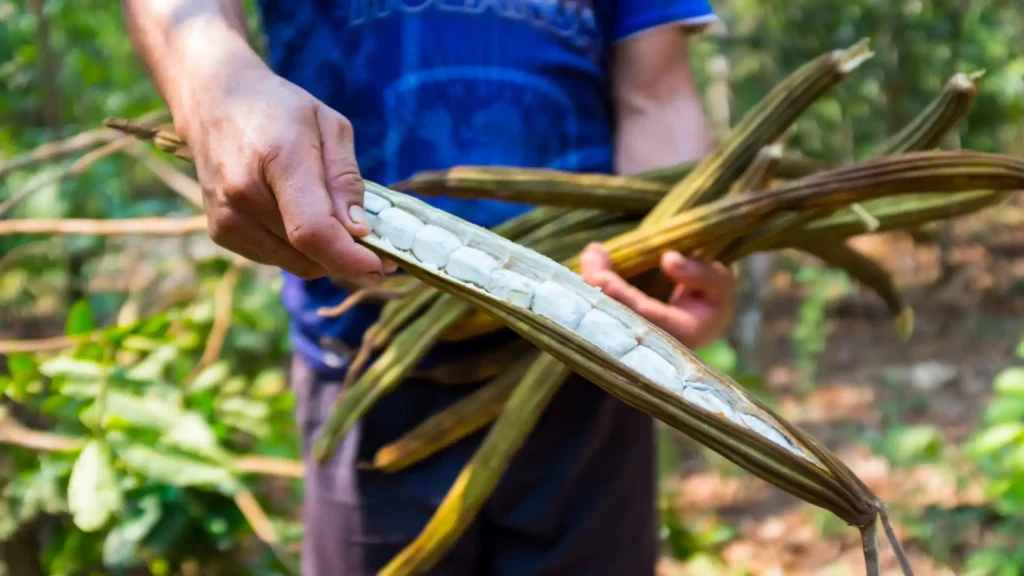
Pacae or guaba (Inga edulis) belongs to the legume family and grows long, ribbed green pods, some stretching over half a meter in length. Opening the pod reveals dark seeds coated in a fluffy, white, cotton-like pulp that melts in your mouth—earning it the English nickname “ice cream bean.” Only the sweet white pulp clinging to the seeds is eaten.
With a flavor hinting subtly at vanilla, it is eaten fresh by splitting the pod with your fingers and sucking the sweet coating off the seeds. Beyond its fruit, the tree is invaluable in Amazonian agriculture: it fixes nitrogen into the soil and provides shade for crops like coffee and cacao in agroforestry systems. It thrives in both the rainforest and Andean valleys, appearing in markets across both regions.
Pacae boasts a long history of consumption in Peru; its pods are sold widely in regional markets as a natural sweet treat. Because the tree grows rapidly, it is frequently planted to restore degraded soils and shade cash crops. When buying pacae, select firm pods free of dark soft spots or mold. To eat, split the pod along its seam, lift out the white pulpy segments, and suck off the flesh before discarding the seeds—a fun snack to share with family, especially kids.
Sacha Inchi: Seeds and Food Processing
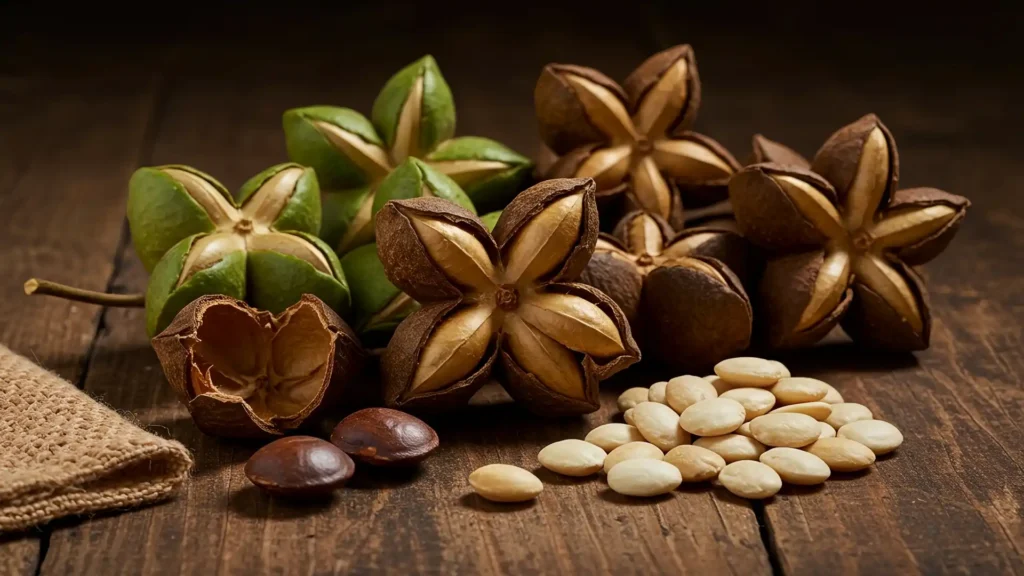
Sacha Inchi (Plukenetia volubilis), sometimes called the “jungle peanut” or “Inca peanut,” is a climbing vine native to the Amazon. It produces star-shaped green pods with four to seven points, each housing an oval seed. Unlike other fruits on this list, the pulp is discarded—only the seeds are consumed, and always after roasting or processing.
Once roasted, the seeds take on a rich, nutty flavor, making them a popular snack. They are also ground into flour or cold-pressed into oil—a growing export product cultivated primarily in San Martín and Ucayali. Raw seeds contain bitter compounds that are neutralized by cooking, so they should never be eaten raw. Sacha Inchi oil is heat-sensitive and best used cold over salads or finished dishes.
Sacha Inchi plays a major role in the rural economy of the Peruvian rainforest. Grown on small family plots and through agricultural cooperatives, its oil and seeds are shipped worldwide. As a climbing vine, it requires trellises or supporting trees, and harvesting occurs once the pods dry on the plant. Roasted seeds taste like a cross between a peanut and a walnut with a light bitter finish. You can add them to salads, yogurts, or baked goods. Store roasted seeds in an airtight container away from heat to keep their natural oils from turning rancid.
Aguaymanto: Characteristics and Culinary Uses
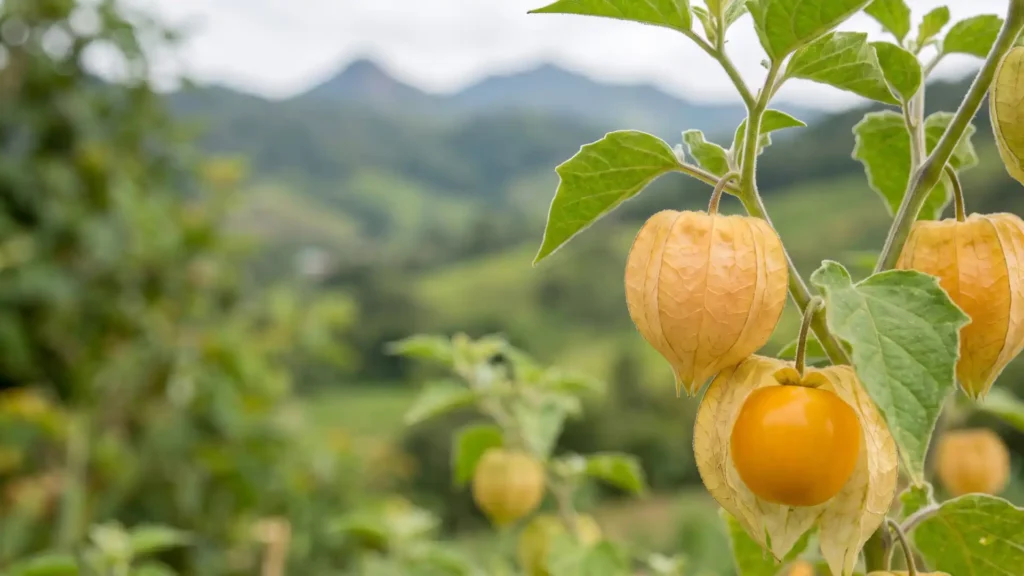
Aguaymanto (Physalis peruviana), known as uvilla or uchuva in other countries, is a round, orange berry about the size of a small grape. It is encased in a thin, papery husk (calyx) that protects the fruit as it matures. While it thrives in Andean valleys and cloud forest edges, it is cultivated in regions like Cajamarca, Junín, and Cusco.
Its flavor balances sweetness with a sharp tartness, filled with tiny edible seeds that add a delicate crunch. It can be eaten fresh, dried like raisins, cooked into jams, turned into savory meat sauces, or used as a garnish for cocktails and desserts. When selecting aguaymanto, look for deep orange berries inside dry husks; green berries will be overly sour. Once the husk is removed, wash the fruit to clean off its naturally sticky skin.
Peru is a leading producer and exporter of goldenberries, particularly in their dried form. The protective husk acts as natural packaging during transit. In Peruvian cuisine, it provides a vibrant counterpoint to savory meats, game, and cheeses, while elevating tartlets and chocolate desserts. Choose firm, orange fruits with dry husks, avoiding any with damp or moldy paper coverings. If buying dried goldenberries, check that no extra sugar has been added.
Lúcuma: Flavor and Presence in Peruvian Gastronomy
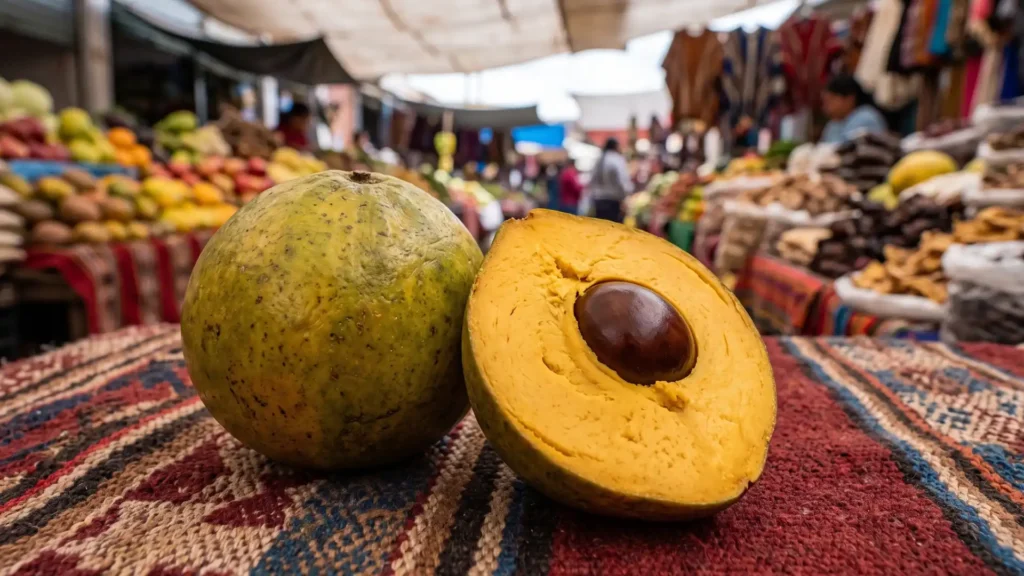
Lúcuma (Pouteria lucuma) is a subtropical fruit tree native to Andean valleys, with a culinary tradition stretching back to pre-Inca civilizations. The fruit has green skin protecting a dense, bright yellow flesh that is dry, mealy, and intensely sweet—with aromas of maple, brown sugar, and sweet potato. While not an Amazonian native, it is essential to understanding Peruvian gastronomy.
Lúcuma is Peru’s favorite ice cream flavor and is featured in milkshakes, cakes, alfajores, mousses, and tarts. It is also processed into a dehydrated powder used as a natural sweetener and flavoring in baking. The fruit must be fully ripe and soft before eating, as unripe lúcuma is harsh and astringent. When traveling in Peru, trying a lúcuma milkshake or ice cream is a must.
Lúcuma is a treasure of Peruvian confectionery with ancient roots; it is frequently depicted on pre-Columbian ceramics from coastal cultures. Grown primarily in Andean and coastal valleys, its dried powder form allows its flavor to be enjoyed worldwide year-round. Its dry texture makes it uniquely suited for rich, velvety ice creams without watering them down. If you want to experience its classic taste, pick up a scoop of lúcuma ice cream at any local gelato shop or a lúcuma milkshake at a local cafe. It is a flavor that many travelers remember long after their trip.
Macambo: A Species Related to Cacao
Macambo (Theobroma bicolor), known as patashte in Mexico and Central America, belongs to the same genus as cacao. This Amazonian tree bears large, oval fruits with a tough, woody brown shell. Inside, a sweet white pulp surrounds large seeds, which are the main culinary star of the plant.
The seeds are eaten roasted or boiled, offering a mild, nutty flavor reminiscent of macadamia nuts with a faint whisper of cocoa. They are eaten as snacks, ground into drinks, or used in savory and sweet Amazonian dishes. The surrounding pulp is also edible and made into drinks. Though little known outside the rainforest, macambo is well worth sampling if you spot a stall selling it.
For rainforest communities, macambo is a traditional forest harvest prepared in several ways: seeds can be boiled, grilled over coals, or dry-roasted depending on the family recipe. Milder and less bitter than cacao, macambo appeals to those seeking a crunchy, savory snack. The heavy pods are harvested when they change color and are cracked open with a firm strike or machete. It is a fascinating fruit for food tourism as it demonstrates how communities utilize different parts of the same plant. If offered macambo on a tour, ask how it was prepared.
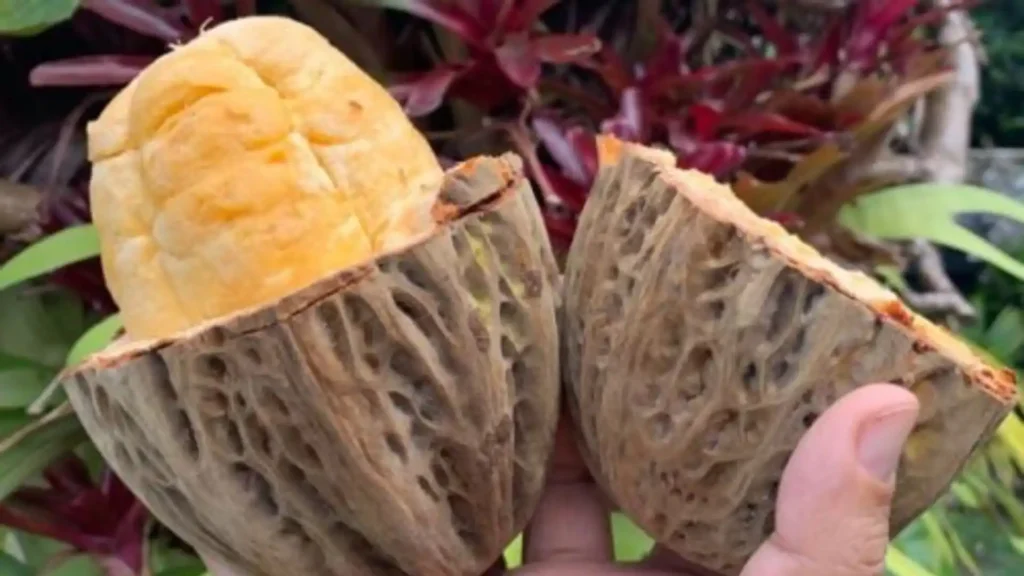
Ungurahui: The Fruit of an Amazonian Palm
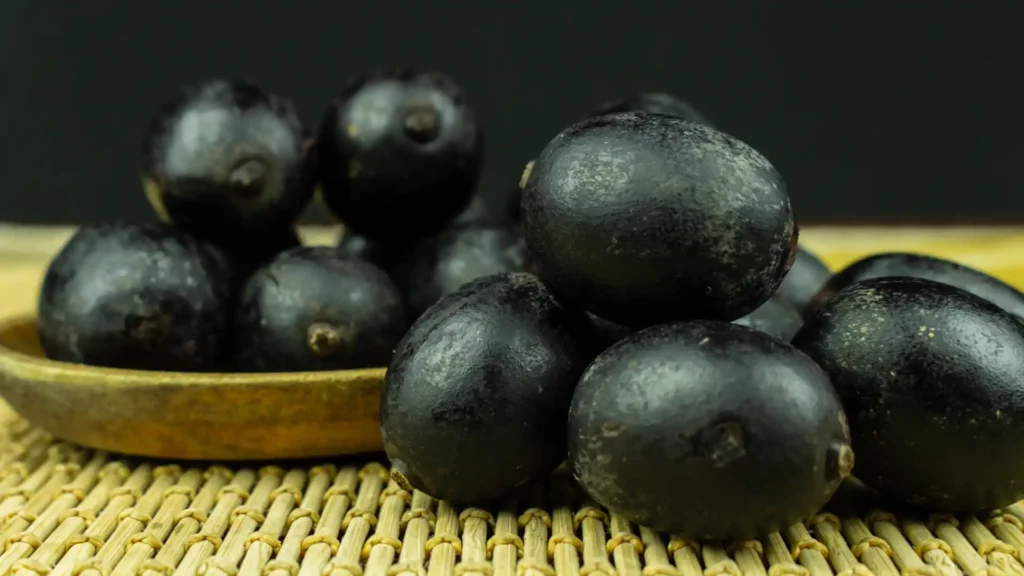
Ungurahui (Oenocarpus bataua) is a tall, slender palm reaching over 20 meters high in terra firme and seasonally flooded forests across the Amazon basin. Its heavy clusters produce small, dark purple to black oval fruits covered by a thin layer of oily pulp surrounding a large seed.
To prepare it, the fruit is soaked in warm water and mashed to extract a rich, smooth, milk-like purple beverage. In the jungle, this drink is enjoyed plain or alongside meals. Ungurahui oil has a fatty acid profile remarkably similar to olive oil and is used traditionally. The palm’s fruits also feed wild birds and mammals, making its conservation important for forest health.
Ungurahui is one of the most useful palms in the Amazon. Beyond its fruit, indigenous communities use its fronds for thatched roofing and its trunk for light construction, while its oil is used in traditional cosmetics and food. Harvesting the high-hanging clusters takes considerable climbing skill. Served cold with a hint of sugar or honey alongside cassava or banana, it offers a simple, classic refreshment.
Taperibá or Ubos: Flavor and Applications
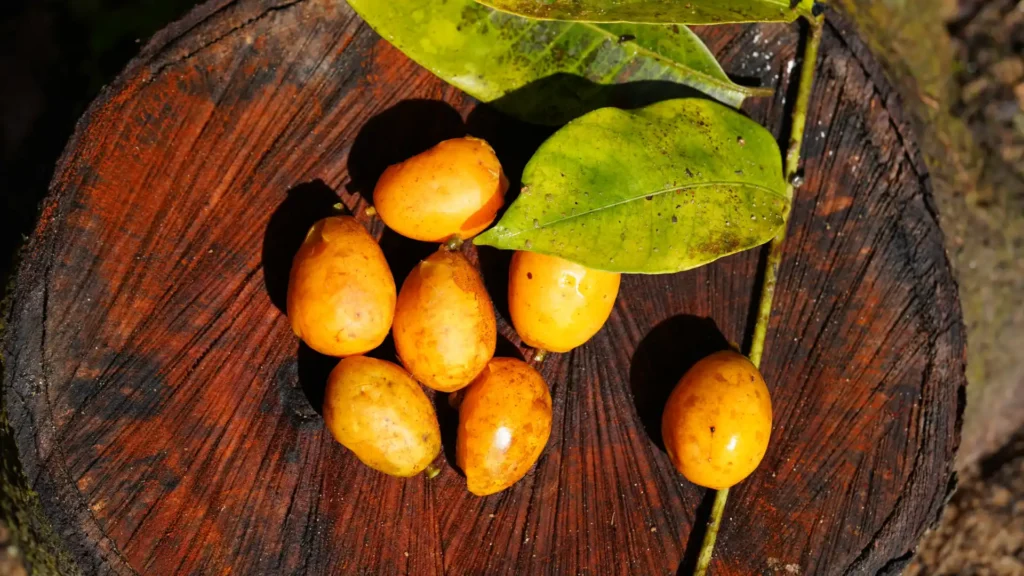
Taperibá (Spondias mombin), also called ubos in parts of the Peruvian Amazon, grows on large forest trees. It bears oval, bright yellow fruits measuring three to four centimeters long. Featuring thin skin, juicy flesh, and a powerful aroma combining notes of mango and citrus, it delivers a punchy sweet-and-sour flavor. The central pit is large and fibrous, leaving a small but flavorful portion of edible pulp.
While some enjoy sucking the fresh pulp off the stone, taperibá shines brightest in juices, refrescos, and sorbets, where its aromatic tartness dominates. It is a seasonal fruit widely available in jungle markets during harvest months. Belonging to the same family as mangos and cashews, one whiff of a ripe taperibá explains its culinary popularity.
Taperibá trees are also prized for shade and lightweight wood around forest farms. Fallen ripe fruits are eagerly eaten by land mammals, birds, and fish in flooded areas. In juice stands, taperibá pulp is often blended with sweeter fruits like pineapple or banana to tame its sharp acidity. When choosing fresh taperibá, look for fruits with a strong, fruity fragrance—unscented ones are still green. If your trip coincides with the harvest, don’t miss the chance to try it.
Mamey: Characteristics of This Tropical Fruit
Mamey (Mammea americana) comes from a large tree native to the Caribbean and northern South America, cultivated in tropical home gardens across the Peruvian Amazon. It yields round fruits 10 to 20 centimeters wide with thick brown rind and firm, deep-orange pulp that tastes like a sweet, fragrant apricot. Only the orange flesh is eaten; the rind and seeds are discarded.
Mamey is eaten fresh, blended into drinks, or cooked into jams and preserves, as its firm flesh holds up exceptionally well to heat. It should not be confused with the Mexican mamey sapote or sapodilla, which are different species with creamier flesh. When buying mamey, select fruits that yield slightly to pressure and give off a sweet floral aroma.
Although introduced to the Peruvian jungle long ago, mamey has integrated seamlessly into tropical fruit gardens. The trees are sturdy, broad-canopied, and long-lived. The harvest yields fruit over several weeks. To prepare it, remove the outer rind along with the bitter white membrane covering the orange flesh. Its apricot-like flavor makes it an excellent candidate for pies, jams, and stewed fruit desserts.
Chambira: Importance of the Palm and Traditional Uses
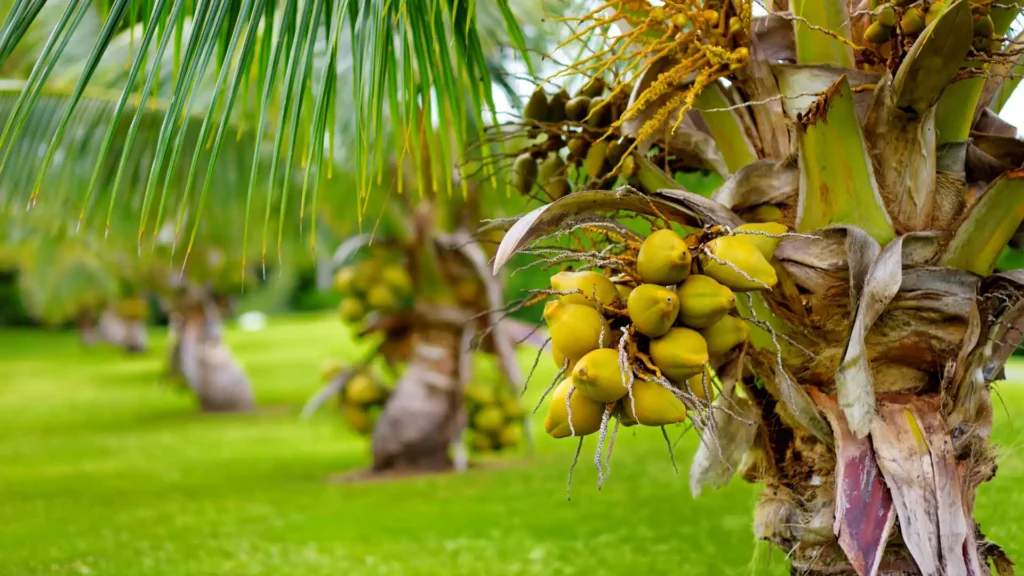
Chambira (Astrocaryum chambira) is a spiny palm native to the Amazon rainforest. It produces clusters of yellowish-green round fruits about five centimeters wide with edible pulp and a hard seed. While the fruit is eaten locally, the palm is world-famous for the tough fiber extracted from its young fronds.
Indigenous communities harvest these young leaves, strip the inner fibers, spin them into threads, and dye them with natural forest pigments. They weave these fibers into durable hammocks, bags, nets, and artisan crafts sold to travelers. This weaving craft forms an important pillar of indigenous culture and household income. Purchasing an authentic chambira bag directly supports local weaving families.
Chambira perfectly demonstrates how a single forest species provides food, utility, and cultural art. Extracting the fiber requires patience: young leaves are harvested carefully to avoid sharp trunk spines, stripped, dried, and hand-spun before dyeing. Each woven bag represents hours or days of skilled work. Visiting a community to watch the spinning and weaving process offers deep insight into traditional forest life.
Huasaí or Amazonian Açaí: Fruit Characteristics
Huasaí (Euterpe precatoria) is a tall, single-trunked palm thriving in the wet forests of the Peruvian Amazon, particularly in Madre de Dios, Loreto, and Ucayali. Its hanging clusters bear small, dark purple berries with a thin layer of flesh over a large seed. As a close relative of the Brazilian açaí palm, it is often called Amazonian açaí.
The pulp is extracted by soaking the berries in warm water and rubbing them to produce a thick, earthy, purple puree. It is served chilled as a drink, enjoyed plain, or layered into açaí bowls with fresh fruit and granola. Because this species has a single trunk, cutting it down kills the tree; purchasing wild-harvested huasaí from certified sustainable projects ensures the palms are climbed rather than felled.
Huasaí represents a growing industry aimed at balancing forest conservation with economic development. Local harvesters climb tall wild palms using traditional foot-ropes, keeping the surrounding canopy intact. Its earthy flavor—often described as reminiscent of unsweetened dark chocolate—pairs wonderfully with sweet fruits like banana or strawberry. When ordering a bowl, look for pure pulp without added heavy sugars to appreciate its true flavor profile.
Copoazú: An Amazonian Relative of Cacao
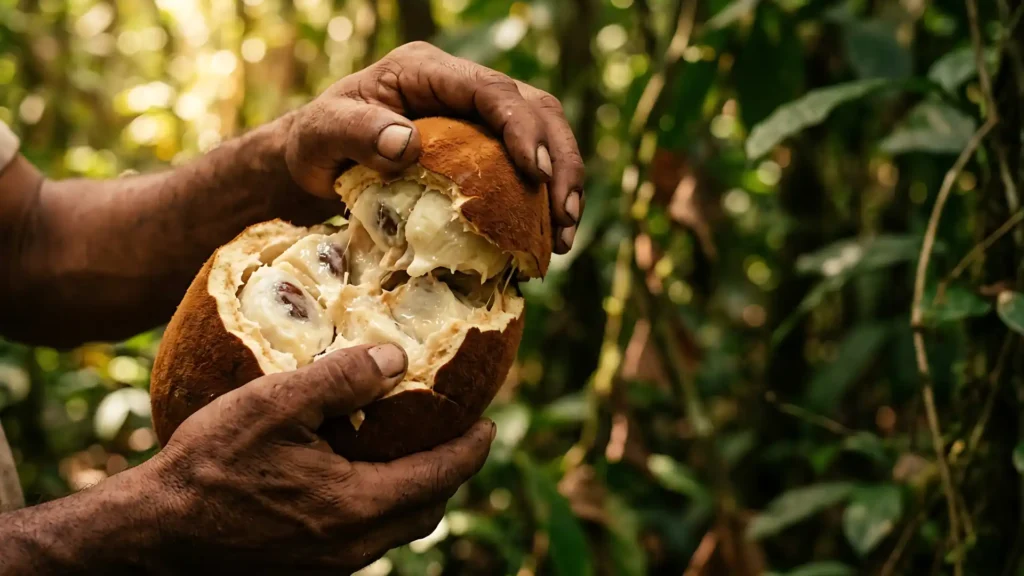
Copoazú (Theobroma grandiflorum) is a rainforest tree in the same genus as cacao, native to the eastern Amazon and widely cultivated in Peru. It produces large, heavy, oval pods with a rigid, fuzzy brown shell that can weigh over a kilogram. Inside, a creamy white pulp wraps around seeds, delivering a sweet, tart flavor and a powerful tropical aroma.
The fragrant pulp is blended into refreshing juices, ice creams, mousses, and sweets. Meanwhile, its seeds can be processed like cocoa beans to create a chocolate-like paste called cupulate. When buying fresh copoazú, look for heavy pods with a strong aroma. The frozen pulp preserves extremely well, allowing its unique taste to travel far beyond the jungle.
Copoazú holds a special place in Amazonian gastronomy due to its unforgettable fragrance—a mix of tropical fruits with a hint of chocolate. It is grown in sustainable agroforestry plots beneath larger canopy trees, protecting soil health. Using copoazú pulp in homemade creams, smoothies, or tarts offers a delightful tropical twist on traditional desserts.
Carambola: The Star-Shaped Fruit
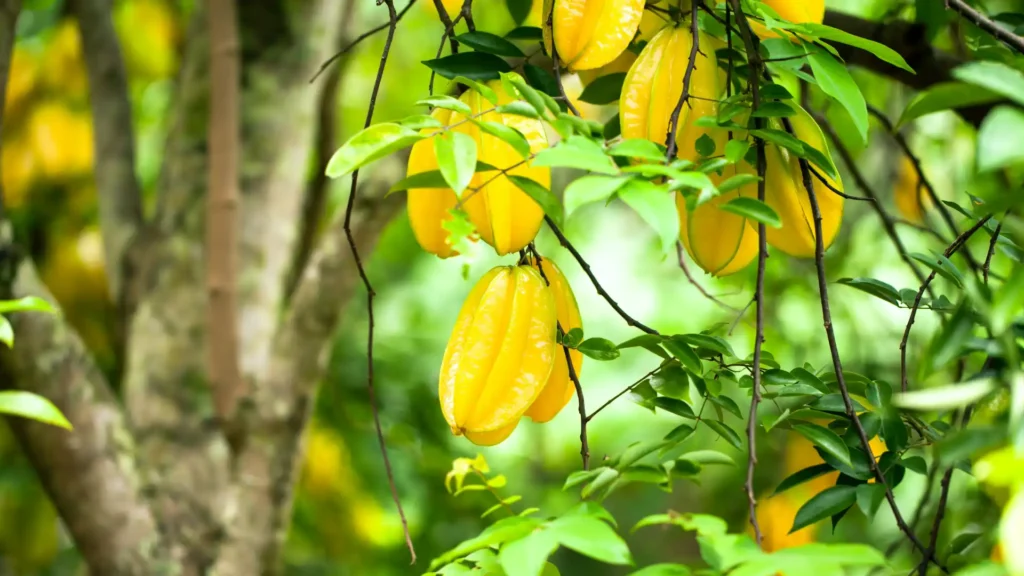
Carambola (Averrhoa carambola), or star fruit, originated in Asia and was introduced to tropical America centuries ago. Today it is widely cultivated across the Peruvian Amazon. It is an elongated yellow fruit with five prominent ridges; when sliced crosswise, each piece forms a distinct five-pointed star. The skin is thin and entirely edible.
Its crisp, juicy flesh varies from tart to sweet depending on the variety and ripeness. It is enjoyed fresh, tossed into salads, blended into juices, or used as a decorative garnish for drinks and plates. Important Note: Individuals with kidney disease should avoid carambola, as it contains substances that can be toxic when kidney function is impaired.
Star fruit is one of the most eye-catching tropical fruits available. Sliced stars instantly brighten up fruit salads and cocktail rims, while blending the fruit yields a thirst-quenching juice. Tart varieties work best in cooked sauces and juices, while sweeter ones are delicious fresh. Select bright yellow fruits with light browning along the outer rib edges, which indicates full ripeness.
Maracuyá: Aroma, Acidity, and Beverage Uses
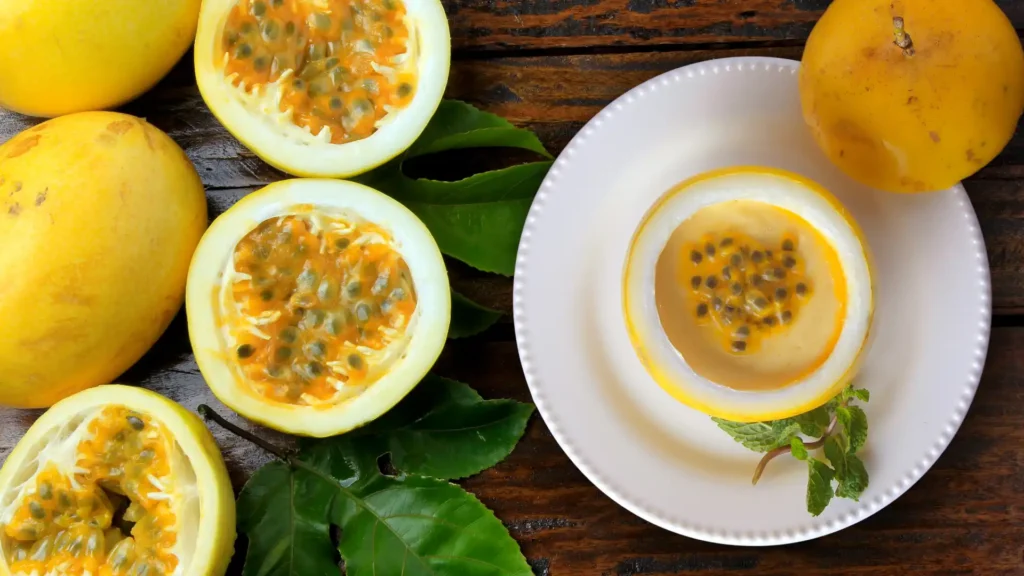
Passion fruit (Passiflora edulis) is a vine native to South America grown extensively in warm regions of Peru, including the central jungle and San Martín. The fruit is round or oval with a tough skin (yellow or purple) housing an aromatic, orange, jelly-like pulp packed with edible black seeds. Its flavor is famously tart and fragrance-rich.
In Peru, maracuyá is ubiquitous: it stars in juices, ice creams, mousses, cheesecakes, savory sauces, and the Maracuyá Sour (a tropical twist on the Pisco Sour). To pick the juiciest fruits, choose heavy ones with slightly wrinkled skin—wrinkles indicate full ripeness and maximum sweetness. The pulp can be pulsed briefly in a blender and strained to yield pure juice.
Passion fruit is an essential pillar of Peruvian beverage and dessert culture. Its sharp punch of acidity cuts through sugar, leaving behind a lingering aroma even when frozen. Making passion fruit juice at home requires only pulp, water, and sugar to taste. For a simple dessert, mix the pulp with condensed milk or yogurt and chill. If you have extra pulp, freeze it in ice cube trays for easy use later.
Golden Pineapple: Flavor and Features of This Variety
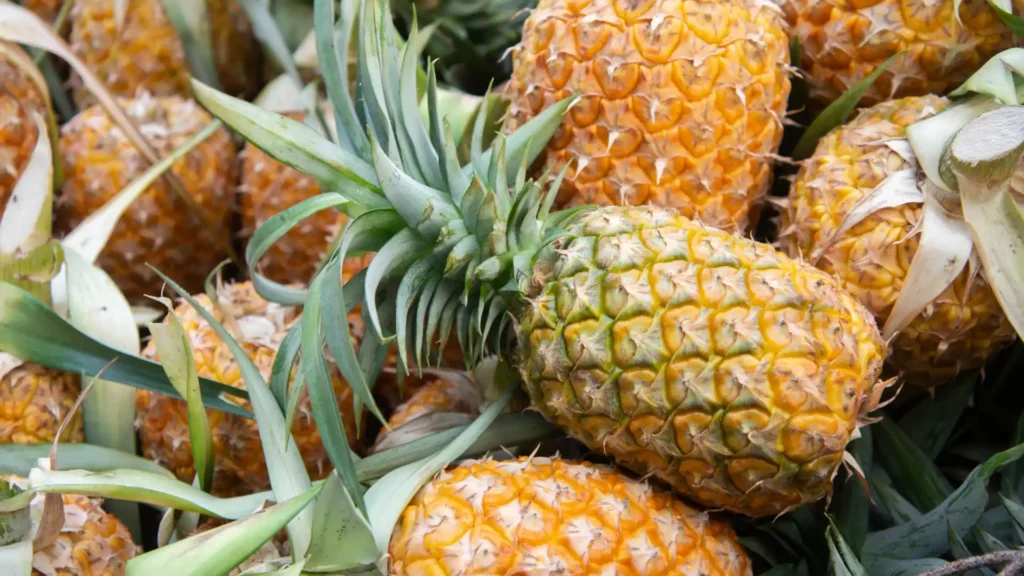
Pineapple (Ananas comosus) is native to South America. The “Golden” variety (MD-2) is a modern commercial cultivar developed in the late 20th century, prized for its bright yellow flesh, high sugar content, low acidity, and long shelf life. It is grown extensively in Peruvian high-jungle valleys like the central jungle.
Eaten fresh, grilled, or blended into juices and smoothies, Golden Pineapple appeals to those who find traditional pineapples too acidic. It contains bromelain, a natural enzyme that breaks down proteins and can cause a slight tingling sensation on the tongue if eaten in large quantities. Choose heavy pineapples that smell sweet at the base and have firm green leaves.
Golden Pineapple is a prime example of how tropical fruit production supports farming families across the Peruvian high jungle. Beyond fresh consumption, it holds up beautifully when grilled alongside meats or baked into cakes. To check for ripeness, smell the bottom of the fruit—it should give off a rich, sweet aroma. Once sliced, store it in an airtight container in the fridge for up to three days.
What Are the Benefits and Nutritional Properties of Amazonian Fruits?
Most tropical fruits provide hydration, natural sugars, fiber, and essential micronutrients. While some species boast exceptional nutrient profiles, exact values depend on soil, climate, variety, and ripeness.
Fruits Providing Vitamin C and Micronutrients
Vitamin C is an essential nutrient that the human body cannot produce on its own. It plays a key role in collagen synthesis, enhances non-heme iron absorption from plant sources, and functions as an antioxidant. Camu camu leads all fruits on this list in vitamin C concentration, far surpassing citrus fruits according to published studies.
Passion fruit, pineapple, and star fruit also provide vitamin C, while aguaje and aguaymanto are rich in carotenoids (precursors to vitamin A that give them their orange hues). Because vitamin C degrades under heat, light, and air exposure, fresh fruits and raw frozen pulps retain more nutrients than heavily processed products. A balanced diet incorporating diverse fruits easily covers daily recommended intakes for healthy adults.
To maximize vitamin C intake, consume fruits fresh or freshly blended. Pairing vitamin C-rich fruits with plant foods high in iron (like beans or spinach) aids iron absorption. Eating a colorful variety of fruits ensures a broad spectrum of micronutrients without needing single “miracle” foods.
Fruits with Fiber and Their Role in a Balanced Diet
Dietary fiber is the indigestible portion of plant foods that supports digestive health, promotes satiety, and feeds beneficial gut bacteria. Soluble fiber (abundant in fruit pulps) forms a gel-like substance in the digestive tract, while insoluble fiber (found in skins and seeds) adds bulk. Health organizations generally recommend consuming about 25 grams of fiber daily.
Whole Amazonian fruits like aguaje, huasaí, cocona, and passion fruit (consumed with seeds) offer healthy doses of dietary fiber. Juicing and straining fruits removes much of this fiber, so eating whole fruit is recommended alongside drinking juices. When increasing fiber intake, do so gradually and drink plenty of water.
A simple way to incorporate more fiber is to swap out some juices for whole fruit, or blend fruits without straining them when possible. People with specific digestive conditions should consult a professional regarding fiber types and amounts. In general, variety is your best ally: different fruits offer different types of fiber and nutrients.
Fruits and Seeds Containing Unsaturated Fats
Unsaturated fats (such as oleic acid and omega-3s) are essential components of a healthy diet found in seeds, nuts, plant oils, and certain palm fruits. In the Amazon, standouts include Sacha Inchi (seeds rich in alpha-linolenic acid, a plant-based omega-3), ungurahui (oil rich in oleic acid), and aguaje (an oily palm fruit pulp).
Because fats are energy-dense, moderation is key: a small handful of roasted Sacha Inchi seeds or a drizzle of oil over a salad provides plenty. Cold-pressed Sacha Inchi oil should not be used for high-heat frying, as heat degrades delicate omega-3 fats. Always store plant oils in cool, dark places to prevent oxidation.
When a seed or oil is presented as healthy, keep the broader context in mind: Sacha Inchi or ungurahui oil cannot offset a diet high in ultra-processed foods. Start with small amounts to see how you tolerate them. Those with food allergies should consult a specialist before trying new seeds or nuts.
| Fruit or Seed | Highlighted Component | Notes |
|---|---|---|
| Camu camu | Vitamin C | Varies with maturity |
| Aguaje | Carotenoids & unsaturated fats | Oily pulp |
| Sacha Inchi | Unsaturated fats | Roasted seed |
| Ungurahui | Pulp & seed oil | Traditional use |
| Maracuyá | Vitamin C & fiber | Pulp with seeds |
| Huasaí | Anthocyanin pigments | Thick pulp |
Los datos son orientativos. Para valores exactos consulta las tablas de composición de alimentos del Instituto Nacional de Salud del Perú.
How to Interpret Nutritional Information for Fruits
Reading a nutritional table requires attention to detail. First, look at the serving size: values are typically given per 100 grams of food, which may not match what you actually eat. Second, consider the state of the food: fresh pulp, frozen pulp, and concentrated powder (which loses water weight) differ significantly in density; a powder may show high nutrient counts per 100 grams but is consumed in tiny servings.
Variety, growing area, ripeness, and processing method also cause variations in lab analyses. For reliable data, consult official Peruvian food composition tables from the National Institute of Health or international databases like the FAO, and remain skeptical of unreferenced claims in advertising.
A practical tip is to compare similar products by equal serving sizes (e.g., compare fresh fruit to fresh fruit, not fresh fruit to concentrated powder). Also verify whether data refers to the whole fruit, flesh, or peel. Solid scientific conclusions require rigorous research beyond catchy headlines.
Differences Between Nutritional Properties and Unproven Medicinal Benefits
A nutritional property is a measurable characteristic: how much vitamin C, fiber, or fat a food contains, verified in laboratory settings. A medicinal benefit, by contrast, claims that a food prevents, treats, or cures an illness—requiring extensive, peer-reviewed clinical trials in humans to substantiate.
While many Amazonian fruits are marketed as “superfoods,” they are best enjoyed as part of a varied diet rather than viewed as medical cures. Whole fruits support overall wellness, but concentrated supplements or powders should be evaluated carefully, especially by pregnant individuals or those taking medication.
This distinction helps you read with a critical eye. A label stating “rich in antioxidants” describes a nutrient feature, not a health promise. Claims promising disease prevention or cures require solid scientific backing and health authority approval. Enjoy these unique flavors without exaggerated expectations.
How Are Fruits of the Peruvian Rainforest Consumed?
The consumption method depends on each fruit: some are enjoyed fresh right off the tree, while others require light processing or cooking to unlock their flavors.
Amazonian Fruits Consumed Fresh
Eating fruits fresh is the simplest way to sample Amazonian flavors. Caimito, yellow dragon fruit, pacae, Amazonian zapote, mamey, and star fruit require no cooking—simply peel or cut them open and enjoy the pulp. They make ideal snacks while exploring market towns or traveling between excursions.
Practical tips: select fruits that yield slightly to gentle pressure, emit a sweet fragrance, and have no bruises. Wash them well before peeling and consume them the same day or keep them refrigerated for a day or two. When traveling, buy from busy markets where inventory turns over rapidly.
A great travel practice is trying fruits in their prime location: tree-ripened fruit bought locally offers vastly superior flavor compared to fruit transported over long distances. Don’t hesitate to ask vendors to show you how to open unfamiliar fruits—they are usually happy to demonstrate.
Juices, Refrescos, and Traditional Drinks
Juices and refrescos are the most popular way to enjoy Amazonian fruits, as water and sweetener balance their natural acidity. Camu camu, cocona, copoazú, taperibá, passion fruit, and zapote are routinely blended with cold water and sugar to beat the tropical heat. Aguajina is made by soaking aguajes in warm water, peeling the scales, and blending the oily pulp with water and sugar.
Palms like ungurahui and huasaí yield smooth, dense beverages. When purchasing fresh fruit drinks from street stalls, ensure vendors use purified water and clean ice.
To recreate these drinks at home, frozen pulps of camu camu, passion fruit, copoazú, or cocona work exceptionally well. A simple ratio is one part pulp to two or three parts water, sweetened to taste. Tart fruit drinks pair wonderfully with rich or fried meals, providing a crisp, refreshing balance.
Jams, Desserts, and Regional Dishes
Tart or highly perishable fruits find a second life in kitchen preserves. Cocona and goldenberry make vibrant jams, while passion fruit is crafted into mousses, cheesecakes, ice creams, and savory glazes. Copoazú shines in cakes and pastries, and aguaje and lúcuma remain iconic Peruvian ice cream flavors.
Regional savory dishes feature fruit too: ají de cocona accompanies fried river fish and boiled cassava. Purchasing artisanal jams directly from rainforest producer associations makes for a delicious, travel-friendly souvenir that supports local rural economies.
If you enjoy cooking, homemade cocona or goldenberry jam is easy to make: simmer the fruit with sugar until it thickens, then store in sterilized jars. Passion fruit pulp can also be reduced with sugar to make a quick dessert topping or combined with chili and herbs for savory glazes.
Fruits and Seeds Used in Food Products
Beyond fresh consumption, processing fruits into shelf-stable goods allows Amazonian flavors to reach global markets. Sacha Inchi is sold as roasted snacks, protein powder, and oil; camu camu as freeze-dried powder; huasaí as frozen açaí packs; and goldenberries as dried fruit. Macambo and copoazú are used in chocolate-like confections.
When purchasing packaged products, check labels for origin, ingredient purity, expiration dates, and sustainable harvesting practices. Pure powders dissolve easily into smoothies or water, yielding high nutritional value in small servings.
Consider the production chain when buying processed goods. Products from cooperatives often provide fair-trade traceability and support community livelihoods. Keep powders and oils stored in cool, dark spaces, and try small amounts first if you have food sensitivities.
The Importance of Preserving Local Gastronomic Practices
Behind every juice, ice cream, or jam lies traditional knowledge passed down through generations: knowing when to harvest, how to ripen aguaje, how to extract ungurahui, or how to spin chambira fiber. These practices form an invaluable part of Amazonian cultural heritage.
Visitors can contribute positively by purchasing directly from local producers, asking respectfully about preparation methods, choosing seasonal fruits, and avoiding products derived from destructive harvesting (such as cutting down palms to harvest fruit). Supporting sustainable tourism helps families preserve their ecosystems and cultural identity.
Preserving culinary traditions also protects biodiversity, as many traditional methods focus on sustainable forest management. Visiting local farms, food markets, or participating in cooking workshops allows travelers to connect meaningfully with the region’s heritage.
Which Fruits of the Peruvian Rainforest Are Native to the Amazon?
Not all fruits eaten in the Amazon originated there. Understanding their origins highlights the history behind each flavor.
Representative Species of Amazonian Biodiversity
Truly native Amazonian species include aguaje, camu camu, cocona, caimito, Amazonian zapote, pacae, Sacha Inchi, macambo, ungurahui, taperibá, chambira, huasaí, and copoazú. They showcase the diverse plant life of the rainforest.
These native species vary widely: from soaring palms over 20 meters tall to riverbank bushes, cacao relatives, and climbing vines. While camu camu and Sacha Inchi are now cultivated commercially, species like ungurahui and chambira remain largely harvested for local traditional use. This variety reflects the ecological complexity of the forest.
Fruits Cultivated Across Different Regions of Peru
Goldenberry and lúcuma originate in the Andes, while passion fruit and pineapple are native to broader South America—though all are widely grown in the Amazon today. Yellow dragon fruit thrives in cloud forests and high-jungle valleys, while mamey and star fruit were introduced from other tropical regions worldwide.
Introduced or non-native fruits add great value to local agriculture: passion fruit and pineapple have adapted seamlessly to rainforest climates, sustaining many farming families. The presence of Andean fruits like lúcuma and goldenberry in national cuisine showcases the rich blending of regional flavors across Peru.
Differences Between Native and Adapted Fruits
A native fruit evolved within its natural ecosystem and depends on local ecological interactions. An adapted fruit was brought from elsewhere and thrives with agricultural care. Both coexist harmoniously in local markets.
Native species are naturally adapted to local soils, rainfall, and native fauna. Adapted crops may require specific agricultural management. Diversified farming systems that combine native and adapted crops while maintaining tree canopy cover offer resilience and protect forest health.
The Importance of Species and Ecosystem Conservation
Deforestation and land-use changes threaten the forests where these wild fruits grow. Practicing responsible consumption and supporting sustainable agriculture directly contributes to protecting Amazonian biodiversity.
Protecting Amazonian ecosystems ensures the survival of species dependent on them. Aguaje wetlands store carbon, riverbank camu camu stabilizes soil, and palm fruits sustain forest wildlife. Protected areas, community management, and agroforestry projects strive to balance land use with conservation.
Where Are They Grown and How Do Amazonian Fruits Reach the Market?
Regions of the Peruvian Amazon Growing Tropical Fruits
Fruit production is distributed throughout the Peruvian rainforest, with specific regions specializing in certain crops.
Loreto, with its vast river network and aguajales, is the hub for aguaje and camu camu. Ucayali blends local production with trade through Pucallpa. San Martín has emerged as an agricultural leader in Sacha Inchi, cacao, and tropical fruits. Madre de Dios excels in wild harvests like huasaí, while Junín’s central jungle produces pineapple, passion fruit, and citrus crops.
| Region | Associated Fruits & Crops |
|---|---|
| Loreto | Aguaje, camu camu, ungurahui |
| Ucayali | Camu camu, aguaje, copoazú |
| San Martín | Sacha Inchi, pineapple, passion fruit |
| Madre de Dios | Huasaí, aguaje |
| Junín (Central Jungle) | Pineapple, passion fruit |
La tabla es orientativa; muchas frutas se encuentran en más de una región.
Climatic Factors Influencing Fruit Production
High temperatures, heavy rainfall, and humidity encourage plant growth, while seasonal river flooding dictates harvest timing. As a result, certain fruits are strictly seasonal.
Water cycles drive harvesting schedules. In the low jungle, rising rivers flood lowland areas, dictating when wild fruits can be collected. In the high jungle, microclimates along mountain slopes influence fruiting cycles. Climate fluctuations can alter flowering and yields, making agricultural diversification vital for local farmers.
Commercial Uses and Processing of Amazonian Fruits
Fruits reach consumers fresh, as frozen pulps, powders, cold-pressed oils, and manufactured foods. Processing extends shelf life and opens new trade channels for crops like camu camu, Sacha Inchi, and huasaí.
Processing creates economic opportunities for rainforest communities. Frozen pulps travel to cities worldwide, Sacha Inchi oil is bottled for export, and dried goldenberries fill specialty shops. Supporting fair-trade and transparent supply chains ensures farmers receive equitable returns.
Challenges for Sustainable Conservation, Production, and Trade
Key challenges include remote transport logistics, lack of cold-chain infrastructure, market price volatility, and deforestation pressure. Sustainable initiatives seek to address these hurdles through agroforestry, capacity building, and value-added processing.
Solutions involve improving transport, building producer cooperatives, enhancing post-harvest handling, and educating consumers on biodiversity values. When technical support pairs with respect for local communities, fruit production serves as a powerful engine for both development and conservation.
How to Discover Peru’s Culinary and Cultural Flavors?
Gastronomic Diversity of the Coast, Andes, and Amazon
Peru cannot be defined by a single dish. The coast provides seafood, the Andes contributes tubers and ancient grains, and the Amazon brings tropical fruits, river fish, and unique herbs. Exploring all three regions reveals the full scope of Peruvian culinary wealth.
A journey through Peru is a journey across three distinct food worlds: coastal ceviche and chili peppers; hearty Andean stews made with native potatoes and corn; and smoky, fresh Amazonian dishes featuring cassava, plantains, and tropical fruit drinks. This diversity is the product of rich geography, history, and cultural fusion.
Regional Ingredients Essential to Peruvian Identity
Ingredients like chili peppers, quinoa, potatoes, corn, cacao, and Amazonian fruits form the foundation of national culinary identity, interpreted differently across every valley and city.
Many of these ingredients carry thousands of years of history. Potatoes, corn, and quinoa were domesticated in the Andes long ago, while cacao has deep Amazonian roots. Trying these foods prepared in their places of origin offers unmatched cultural connection.
Connecting with Local Culture Through Food
Visiting local markets, community fairs, and family kitchens reveals the heart of a region. Asking locals about fruit names, harvesting methods, and recipes opens up fascinating cultural conversations.
To get the most out of your experience, visit markets early in the morning, sample freshly made juices, and chat with local vendors. Participating in cooking classes or farm visits transforms food into a powerful learning experience.
Gastronomy as a Central Element of Travel in Peru
For many travelers, food is the highlight of their journey. Combining market tours, fruit tastings, and visits to rainforest communities engages all five senses.
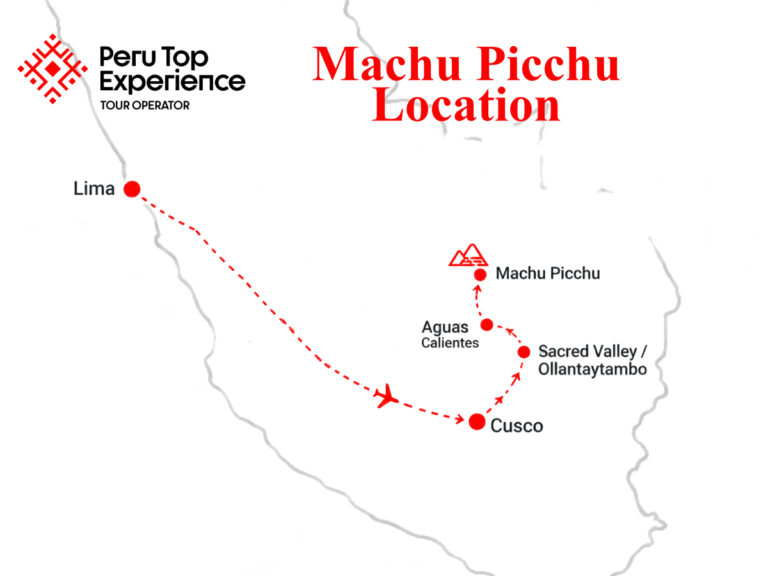
Design your travel itinerary around food: explore coastal cuisine in Lima, experience Andean ingredients in Cusco and the Sacred Valley, and head into the rainforest to sample wild fruits and river fish. Working with a knowledgeable local tour operator ensures a seamless journey tailored to your interests.
Frequently Asked Questions About Peruvian Rainforest Fruits
What are the most famous fruits of the Peruvian rainforest?
The most famous include aguaje, camu camu, cocona, caimito, pacae, copoazú, and huasaí. All are easily found in regional markets throughout Iquitos, Pucallpa, and Tarapoto.
To start with the easiest ones, try aguaje as aguajina or ice cream, camu camu as a refreshing juice, and fresh caimito. They offer three distinct flavor profiles (oily & tart, intensely sour, and soft & sweet).
Which fruits are native to the Peruvian Amazon?
Native fruits include aguaje, camu camu, cocona, caimito, pacae, Amazonian zapote, macambo, ungurahui, taperibá, huasaí, and copoazú, along with Sacha Inchi seeds.
A handy rule of thumb is to look to the forest: native species include palms (aguaje, ungurahui, huasaí, chambira), riverbank shrubs (camu camu), cacao relatives (macambo, copoazú), and legumes (pacae).
What are the most consumed tropical fruits in Peru?
Widely consumed tropical fruits across Peru include pineapple, passion fruit, banana, mango, and papaya, alongside regional staples like aguaje and camu camu in the rainforest.
Peru is also famous for native fruits like lúcuma, goldenberry, and cherimoya. While Amazonian fruits are heavily consumed regionally, their popularity continues to grow nationwide in frozen pulps and ice creams.
Which Amazonian fruits contain Vitamin C?
Camu camu is the standout source. Passion fruit and pineapple also supply vitamin C in smaller amounts. Exact levels vary depending on maturity and processing.
Combine different fruits for maximum variety: enjoy camu camu or passion fruit in drinks, eat fresh pineapple as a snack, and include local citrus in your daily meals.
Which rainforest fruits are used to make juices?
Aguaje, camu camu, cocona, copoazú, taperibá, passion fruit, and Amazonian zapote are commonly used to prepare juices and refreshing cold drinks.
Try combining pulps for unique flavor blends, such as copoazú with passion fruit, or zapote with pineapple. Adjust water and sweetener to taste and serve chilled.
What is the difference between aguaje and camu camu?
Aguaje is the fruit of a tall palm, featuring scaly skin and oily yellow-orange pulp with a rich, slightly tart taste. Camu camu is a small, round berry from a riverbank shrub, deep red to purple, and intensely acidic.
In short: aguaje is oily and mild, made into aguajina or ice cream; camu camu is tiny and sharp, primarily used in juices and powders. They come from entirely different plant families and habitats.
Where are Peruvian rainforest fruits grown?
They are grown throughout the Peruvian Amazon, with major production hubs in Loreto, Ucayali, San Martín, Madre de Dios, and the central jungle of Junín.
Each area has its specialties: Loreto and Ucayali excel in aguaje and camu camu; San Martín leads in Sacha Inchi; and Junín produces abundant pineapple and passion fruit.
Which Amazonian fruits are used in traditional dishes?
Cocona is used in ají de cocona; aguaje in aguajina and ice cream; camu camu in juices; copoazú and macambo in sweets; and ungurahui and huasaí in rich palm drinks.
To try them authentically, look for grilled river fish served with ají de cocona, a cold glass of aguajina, or copoazú ice cream in local Amazonian restaurants and market stalls.
Discover Peru’s Natural and Gastronomic Diversity with Peru Top Experience
The fruits of the Peruvian rainforest capture the essence of the Amazon: incredible biodiversity, ancestral traditions passed through generations, and vibrant flavors waiting to be discovered. From aguaje palms in flooded wetlands to fresh dragon fruit in high-jungle markets, every fruit tells a story of Peru’s natural wealth.
If this guide has inspired you to taste these flavors at their origin, explore Peru beyond its landscapes and discover the richness of its traditions, gastronomy, and cultural diversity with Peru Top Experience.