
Machu Picchu is much more than one of Peru’s most recognizable landmarks. Built by the Incas in the 15th century, this extraordinary site combines sophisticated stonework, agricultural terraces, sacred spaces and a dramatic mountain landscape between the Andes and the Amazon Basin.
Some aspects of Machu Picchu are well documented. Others are still debated by archaeologists and historians. That combination of evidence and unanswered questions is part of what makes the site so fascinating.
Here are 25 facts about Machu Picchu that explain its history, engineering, geography and cultural importance — as well as a few things worth knowing if you plan to see it yourself.
Machu Picchu Facts at a Glance
Before exploring the details, here are some of the most important Machu Picchu facts:
- Location: Cusco Region, Peru
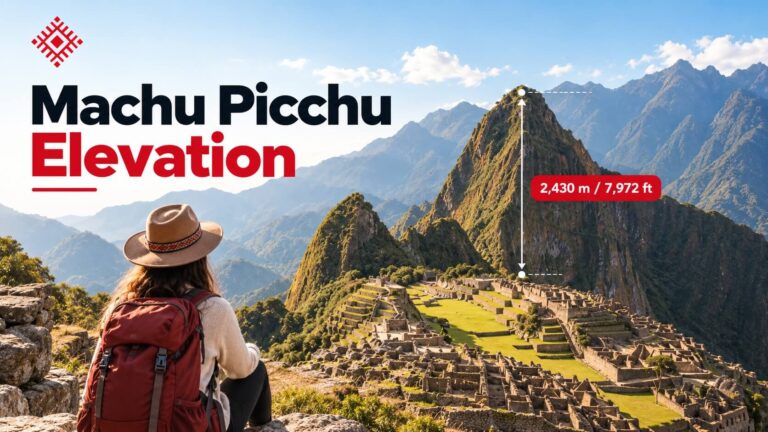
- Altitude: approximately 2,430 meters (7,970 feet) above sea level
- Construction: mainly during the 15th century
- Civilization: Inca
- Language behind the name: Quechua
- Meaning of Machu Picchu: commonly translated as “Old Mountain” or “Old Peak”
- UNESCO status: World Heritage Site since 1983
- Setting: eastern slopes of the Andes, near the upper Amazon Basin
- International recognition: one of the New Seven Wonders of the World

Where is Machu Picchu?
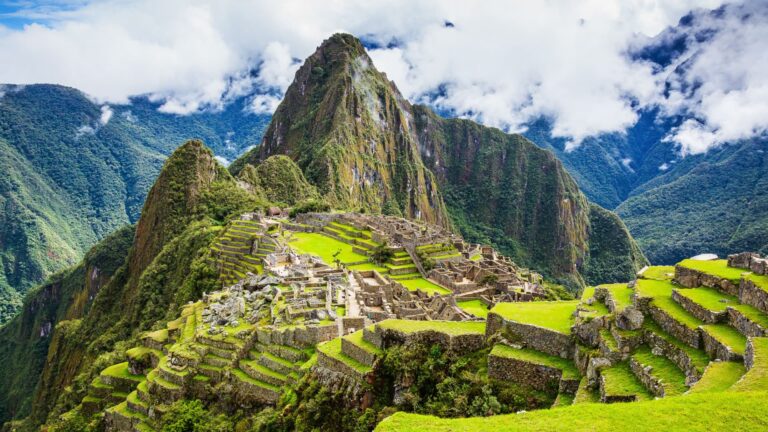
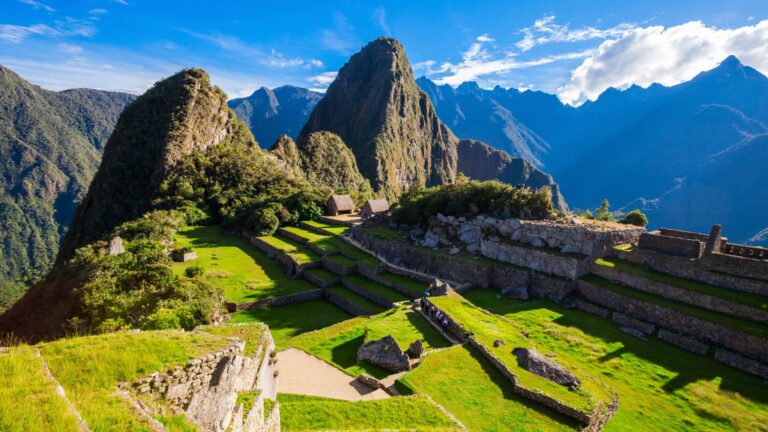
Machu Picchu is located in southern Peru, in the Cusco Region, above the Urubamba River valley. It sits on a mountain ridge surrounded by steep peaks and subtropical vegetation.
Although travelers normally associate Machu Picchu with Cusco, the archaeological site lies more than 1,000 meters lower than the city of Cusco.
Its location is one of the reasons the landscape looks so distinctive: Machu Picchu stands near the transition between the high Andes and the Amazon Basin.
How old is Machu Picchu?
Machu Picchu was constructed during the height of the Inca Empire in the 15th century.
The site is commonly associated with the reign of the Inca ruler Pachacuti, whose rule marked an important period of territorial expansion and monumental construction.
That means Machu Picchu is considerably younger than ancient monuments such as the Egyptian pyramids or the Roman Colosseum.
What does Machu Picchu mean?
The name comes from Quechua, an Indigenous language still widely spoken in the Peruvian Andes.
Machu is generally translated as “old,” while picchu can refer to a mountain or peak. For that reason, Machu Picchu is commonly interpreted as “Old Mountain” or “Old Peak.”
However, researchers continue to study historical place names in the region, so the name by which we know the archaeological site today should not automatically be assumed to have been the exact name used by its original Inca inhabitants.
Historical Facts About Machu Picchu
Machu Picchu’s history is one of the main reasons the site continues to fascinate travelers and researchers. It also contains several popular stories that deserve a little more context.
1. Machu Picchu Was Built During the Inca Empire
Machu Picchu dates mainly to the 15th century, when the Inca Empire was expanding across western South America.
The Incas created an extensive political and road network connecting territories across what are now Peru, Bolivia, Ecuador and parts of neighboring countries.
Machu Picchu belongs to this period of Inca power and architectural development.
2. Its Exact Purpose Is Still Debated
There is no surviving Inca document that gives us a simple explanation of why Machu Picchu was built.
One influential interpretation associates the complex with the Inca ruler Pachacuti and suggests it may have functioned as a royal estate. Its architecture also shows ceremonial, agricultural and possibly astronomical functions.
Rather than serving one single purpose, Machu Picchu may have combined political, religious, residential and economic roles.
That uncertainty is important: calling Machu Picchu simply a “city,” “temple” or “royal retreat” can make a complex archaeological question sound more settled than it actually is.
3. Machu Picchu Was Never Truly “Lost”
You may have heard Machu Picchu called the Lost City of the Incas, but the phrase is misleading.
People living in the surrounding region knew of the ruins before Hiram Bingham arrived in 1911. Local families were present around the site, and Bingham reached Machu Picchu with local guidance.
What happened in 1911 was not the first human encounter with an unknown city. It was the beginning of the process that brought Machu Picchu to much wider international and academic attention.
4. Hiram Bingham Did Not Literally “Discover” Machu Picchu
American historian and explorer Hiram Bingham reached Machu Picchu on July 24, 1911.
His expeditions, photographs, publications and institutional connections played an enormous role in introducing the site to audiences outside Peru.
However, describing Bingham as the person who “discovered” Machu Picchu ignores the local people who already knew of the site and evidence of visitors who reached it before him.
A more accurate description is that Bingham helped bring Machu Picchu to international attention.
5. Agustín Lizárraga Reached Machu Picchu Before Bingham
Evidence also points to a documented visit by the Cusco resident Agustín Lizárraga in 1902, nine years before Bingham.
An inscription bearing Lizárraga’s name and the year 1902 was recorded at the Temple of the Three Windows. Research published by Peru’s Ministry of Culture discusses both the inscription and references to Lizárraga as someone known locally for having reached the site earlier.
This is another reason the popular “discovery in 1911” story needs context.
6. Machu Picchu Was Abandoned Before the End of the Inca Empire
UNESCO describes Machu Picchu as having been abandoned around the period when the Inca Empire was conquered by the Spanish in the 16th century. UNESCO Historic Sanctuary of Machu Picchu
Exactly why occupation declined is more difficult to establish.
There is no single surviving record telling us that everyone left on a particular date for one particular reason. Disease, political disruption and the wider collapse of the Inca state are all part of the historical context.
Interestingly, there is no evidence that Spanish forces destroyed Machu Picchu in the same way that many highly visible Inca structures elsewhere were altered or dismantled.
7. Artifacts Excavated by Bingham’s Expeditions Were Returned to Peru
Hiram Bingham’s expeditions excavated archaeological materials that were taken to Yale University for research.
After a long-running dispute and negotiations between Yale and the Peruvian government, an agreement was reached for their return.
Yale states that materials from its Machu Picchu collections were returned to Peru in shipments during 2011 and 2012. Today, the collections are associated with the Museo Machu Picchu at Casa Concha in Cusco. Yale Peabody Museum anthropology collections
Amazing Facts About Machu Picchu’s Engineering
One of the most remarkable things about Machu Picchu is not simply where the Incas built it, but how they adapted architecture to a steep, wet and geologically challenging mountain environment.
8. Many Important Structures Were Built Without Mortar
Some of Machu Picchu’s most refined structures use carefully shaped stone blocks fitted together without conventional mortar.
This technique is often associated with ashlar masonry, a hallmark of elite Inca construction.
The stones were shaped so precisely that neighboring blocks fit closely together. Larger and more irregular masonry was also used elsewhere, which means not every wall at Machu Picchu was built with exactly the same technique.
9. Its Architecture Was Designed to Cope With Earthquakes
Peru lies in a highly seismic region, and Inca builders developed architectural techniques suited to that environment.
At Machu Picchu, visitors can see features such as trapezoidal doors and windows, slightly inclined walls and carefully fitted stonework.
Rather than relying on rigid masonry joined by mortar, certain Inca walls could respond to movement while retaining their structural integrity.
This does not mean Machu Picchu is literally “earthquake-proof,” but its construction shows a sophisticated understanding of building in an earthquake-prone landscape.
10. Much of Machu Picchu’s Engineering Is Below the Surface
The spectacular walls are what visitors photograph, but some of the site’s most important engineering is much less visible.
Building on a steep mountain with heavy seasonal rainfall required careful foundations, drainage layers and water management.
Archaeological studies have drawn attention to the extensive infrastructure beneath terraces and constructed spaces.
This hidden work is one reason simplistic claims that a precise percentage of Machu Picchu lies “underground” should be treated cautiously. What is clear is that subsurface engineering was essential to the stability of the site.
11. The Incas Created a Sophisticated Water System
Machu Picchu had to manage both drinking water and heavy rainfall.
The Incas directed spring water through a system of channels and fountains serving inhabited and ceremonial areas.
At the same time, drainage was built into terraces and constructed spaces to help prevent water from accumulating and destabilizing the mountain.
The result was not a single aqueduct or drain, but an integrated approach to water management.
12. Agricultural Terraces Helped Stabilize the Mountain
The famous terraces of Machu Picchu were not merely decorative.
Terracing provided usable surfaces on extremely steep terrain and contributed to controlling erosion and drainage. Different layers of material helped water move through the terraces rather than pooling on the surface.
Agriculture was therefore connected to a broader system of landscape management.
The Incas were not simply building on a mountain. They were reshaping the mountain to make settlement possible.
Facts About Machu Picchu’s Design and Sacred Landscape
Machu Picchu makes more sense when viewed not as a collection of isolated buildings, but as an architectural landscape where mountains, stone, water and celestial observations were interconnected.
13. Machu Picchu Had Different Functional Areas
The archaeological complex contains agricultural terraces as well as sectors containing residences, ceremonial spaces and other constructed areas.
Its approximately 200 structures were carefully distributed across a steep ridge.
Changes in masonry, access and location suggest that different parts of Machu Picchu served different purposes.
This organized layout is one reason archaeologists interpret the site as much more than a simple mountain settlement.
14. The Intihuatana Is One of Its Most Famous Sacred Stones
The Intihuatana is one of the best-known carved stones at Machu Picchu.
Its position and form have led researchers to associate it with ritual practices and observations connected with the sun.
The name is often translated loosely as a place for “tying the sun,” although interpretations of its exact ceremonial function should be presented carefully.
What is clear is that the stone occupied a prominent position within the sacred landscape of Machu Picchu.
15. The Sun Gate Was an Important Entrance to Machu Picchu
Intipunku, commonly called the Sun Gate, stands above the main archaeological complex.
Travelers arriving on the Inca Trail to Machu Picchu still approach the area through this dramatic entrance.
Its elevated position creates a strong visual relationship with the surrounding mountains and the archaeological site below.
For modern hikers, reaching Intipunku is also one of the defining moments of the classic Inca Trail experience: it provides the first major view of Machu Picchu at the end of the trek.
16. Mountains Were Part of the Sacred Geography
For Andean societies, mountains were not simply obstacles or scenery.
Prominent peaks could hold religious significance and form part of a sacred landscape connected with water, fertility and community life.
Machu Picchu is surrounded by striking peaks including Huayna Picchu and Machu Picchu Mountain, while the Urubamba River curves through the valley far below.
Researchers have proposed numerous relationships between the architecture and surrounding landscape. Not every alignment or interpretation is universally accepted, but the site’s connection with its natural setting is unmistakable.
Nature and Geography Facts About Machu Picchu
The natural environment is as important to Machu Picchu as its architecture. In fact, UNESCO recognizes the sanctuary for both cultural and natural values.
17. Machu Picchu Is Lower Than Cusco
This fact surprises many travelers.
Machu Picchu stands at approximately 2,430 meters (7,970 feet) above sea level, while Cusco is around 3,400 meters (11,150 feet).
So although photos make Machu Picchu look impossibly high in the Andes, visitors actually descend substantially in elevation when traveling there from Cusco.
Altitude can still affect travelers, especially because most itineraries include time at higher elevations in Cusco or the Sacred Valley. Planning appropriate acclimatization before demanding hikes remains sensible.
Read: Machu Picchu Elevation.
18. It Lies Between the Andes and the Amazon Basin
Machu Picchu occupies an ecological transition zone on the eastern slopes of the Andes.
This helps explain the lush vegetation, mist, steep green mountains and subtropical feel that distinguish it from the drier highland landscapes around Cusco.
UNESCO describes the sanctuary as lying at the meeting point between the Peruvian Andes and the Amazon Basin.
That geographical transition is fundamental to both the appearance and biodiversity of the area.
19. The Historic Sanctuary Protects More Than Archaeological Ruins
When people say “Machu Picchu,” they often mean the famous stone citadel.
The Historic Sanctuary of Machu Picchu, however, covers a much larger cultural and natural landscape containing mountain slopes, valleys, archaeological remains and diverse habitats.
UNESCO inscribed the sanctuary as a mixed World Heritage property, recognizing both its cultural significance and its natural value.
In other words, protecting Machu Picchu involves much more than preserving stone buildings.
20. The Llamas Are Part of the Modern Machu Picchu Experience
Today, llamas wandering across the terraces have become almost as recognizable in photos as Huayna Picchu itself.
Camelids were important throughout the Andes in Inca times, particularly for transport, fiber and other economic uses.
The animals visitors encounter around the archaeological complex today have also become part of the modern visual identity of Machu Picchu.
Just remember that they are animals, not photo props: give them space and follow instructions from site staff.
Cultural Facts About Machu Picchu
Machu Picchu is not simply an archaeological attraction. It forms part of a much larger Andean cultural landscape whose languages, traditions and communities continue into the present.
21. “Machu Picchu” Comes From Quechua
Quechua was widely used within the Inca world and remains a living language spoken by millions of people across the Andes.
Many geographical names around Cusco have Quechua origins, including Machu Picchu.
Understanding this matters because the Inca past is not disconnected from modern Peru. Quechua language, agricultural traditions and elements of Andean culture remain part of daily life in communities throughout the region.
22. Machu Picchu Has Been a UNESCO World Heritage Site Since 1983
UNESCO added the Historic Sanctuary of Machu Picchu to the World Heritage List in 1983.
It is particularly significant because it is recognized as a mixed site, meaning its Outstanding Universal Value includes both cultural and natural characteristics.
UNESCO highlights its architecture and land use as major achievements of the Inca civilization while also recognizing the biodiversity and dramatic environment surrounding the archaeological complex.
23. It Is One of the New Seven Wonders of the World
In 2007, Machu Picchu was named one of the New Seven Wonders of the World following an international public voting campaign.
This title is separate from UNESCO World Heritage status.
The distinction is worth making because the two recognitions come from different organizations and processes. UNESCO designation is based on the World Heritage Convention and formal evaluation criteria, while the New Seven Wonders title came from a global popular initiative.
Both, however, reflect Machu Picchu’s extraordinary international profile.
Travel Facts About Machu Picchu
Knowing the history is one thing. Experiencing the site in person raises a completely different set of questions.
Here are two facts that are especially useful if your curiosity about Machu Picchu is turning into plans for a trip.
24. You Can Reach Machu Picchu by Train or on Foot
There is no conventional road taking visitors directly from Cusco to the entrance of Machu Picchu.
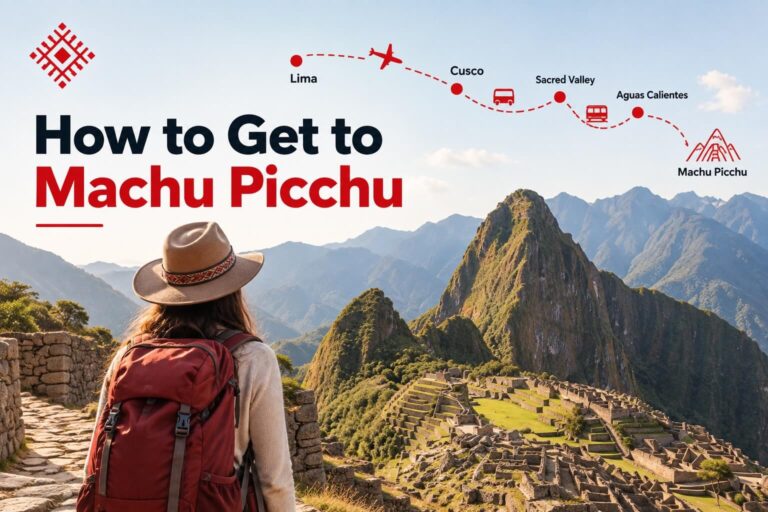
For most travelers, the easiest option is to combine road transportation with a train to Machu Picchu Pueblo, also known as Aguas Calientes, followed by a bus or hike to the archaeological site.
A well-organized Machu Picchu Full Day tour from Cusco can combine these connections into a single itinerary.
Travelers looking for a trekking experience can instead approach Machu Picchu through routes such as the Inca Trail. Other multi-day treks, including Salkantay, reach the Machu Picchu area through different routes and transport combinations.
If you are still deciding how you want to experience the site, compare the available Machu Picchu tours before choosing an itinerary.
25. Machu Picchu Is Not One Single Visitor Route
Visiting Machu Picchu today does not simply mean buying a ticket and wandering freely throughout the archaeological complex.
Entry is organized through designated visitor circuits and routes. The experience can differ depending on the ticket selected, and access to additional hikes may require a specific ticket.
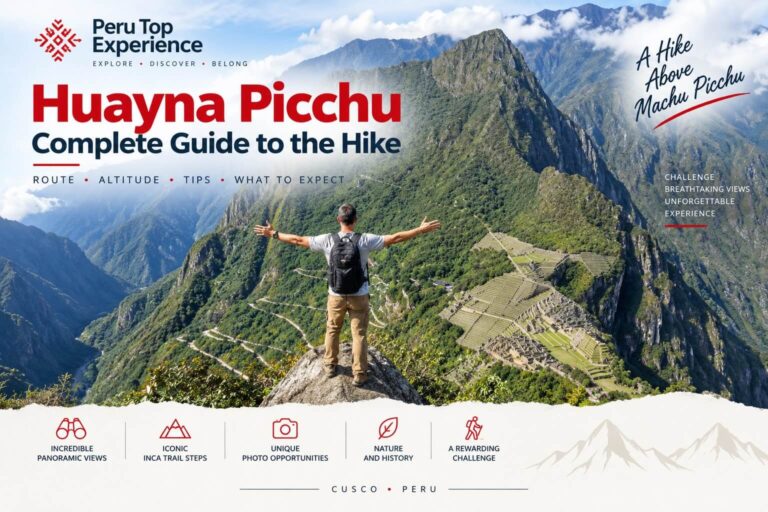
For example, travelers who want to combine the archaeological complex with the famous peak behind it should look specifically at options that include a Machu Picchu and Huayna Picchu hike.
Because entrance rules, routes and availability can change, always check the conditions that apply to your travel date rather than relying on an old map or blog post.
Which Machu Picchu Fact Is the Most Surprising?
Perhaps the most fascinating fact about Machu Picchu is that there is no single fact that explains why it is exceptional.
Its importance comes from the combination of Inca history, sophisticated engineering, sacred architecture and an extraordinary natural landscape.
It was not an unknown city suddenly discovered in 1911. It was not built through mysterious technology. And archaeologists do not have definitive answers to every question about its original purpose.
What survives is impressive precisely because it reveals how effectively the Incas adapted architecture, agriculture and water management to one of the most challenging environments in the Andes.
And many of those details become easier to understand once you are standing among the terraces, temples and mountains yourself.
If Machu Picchu is part of your Peru itinerary, explore the different Machu Picchu tours from Cusco to compare ways of experiencing the site.