

CUSCO, PERU — In the social and political structure of the Tawantinsuyu, the transition into adulthood was not determined by chronological age, but by completing the Warachikuy, the most crucial initiation ceremony for the imperial nobility. Taking its name from the wara—a traditional garment symbolizing social maturity—this rite served as a comprehensive evaluation of physical endurance, military readiness, religious devotion, and political legitimacy for young Cusqueñan nobles.
Far from being a simple military exercise, the process required candidates to endure severe privations, prolonged fasting, pilgrimages to sacred huacas, the hand-crafting of their own apparel and weaponry, and the bestowing of a new name upon passing every stage.
Sacred Geography, Tests of Valor, and Ritual Components
The execution of the Warachikuy linked sacred geography directly with the ancestral memory of the Cusqueñan royal lineages (panakas), centering around Apu Wanakauri, a sacred mountain intimately connected to the mythical origins of the Incas:
- Ritual Route: Initiates began their journey at the Qorikancha temple, traversing sacred trails lined with sanctuaries to invoke the blessing of the Sun God and tutelar deities.
- Tests of Endurance: Candidates underwent high-altitude races, simulated combat against seasoned warriors, and stoicism tests under weapon threat to demonstrate composure.
- Ceremonial Elements: The process featured symbolic puma dances, camelid sacrifices, ceremonial chicha libations, and rites where the mummies of past rulers symbolically participated in legitimizing the candidates.
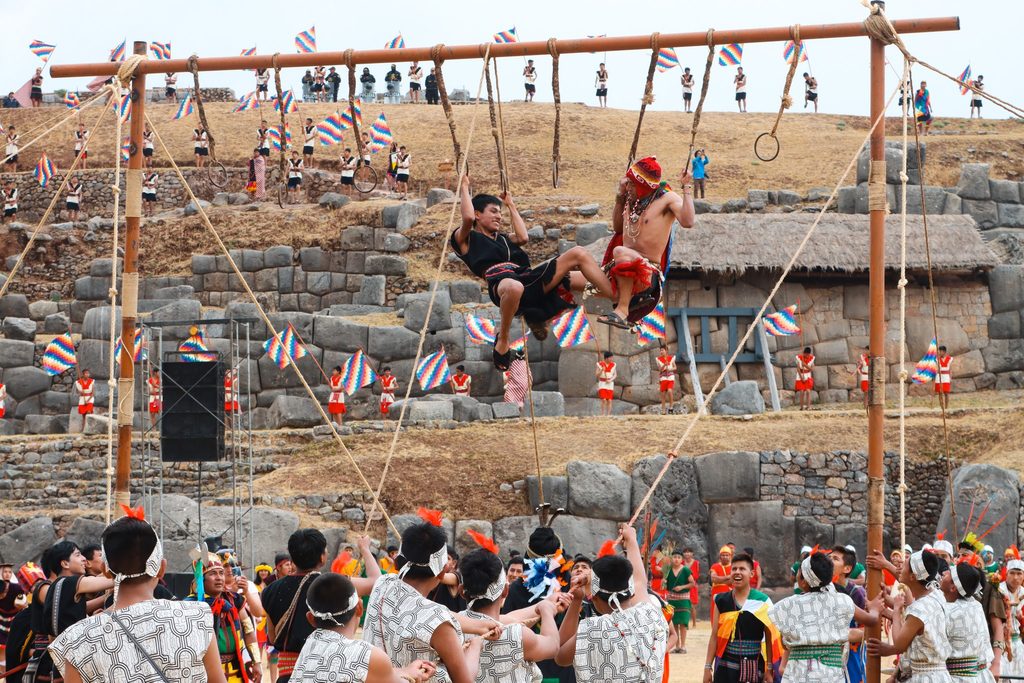
Insignias of Rank: The Wara and the Ear Spools
Upon successfully passing the evaluation cycle, the young men received their weapons of command: the champi (mace), the waraka (sling), and the wallqanka (shield). This was followed by the formal bestowing of the wara.
For high-ranking nobles, the ceremony culminated in the piercing of their earlobes to accommodate large metal or wooden spools—a distinctive mark of elite status that led Spanish chroniclers to refer to the Inca ruling class as the “orejones” (big-eared ones).
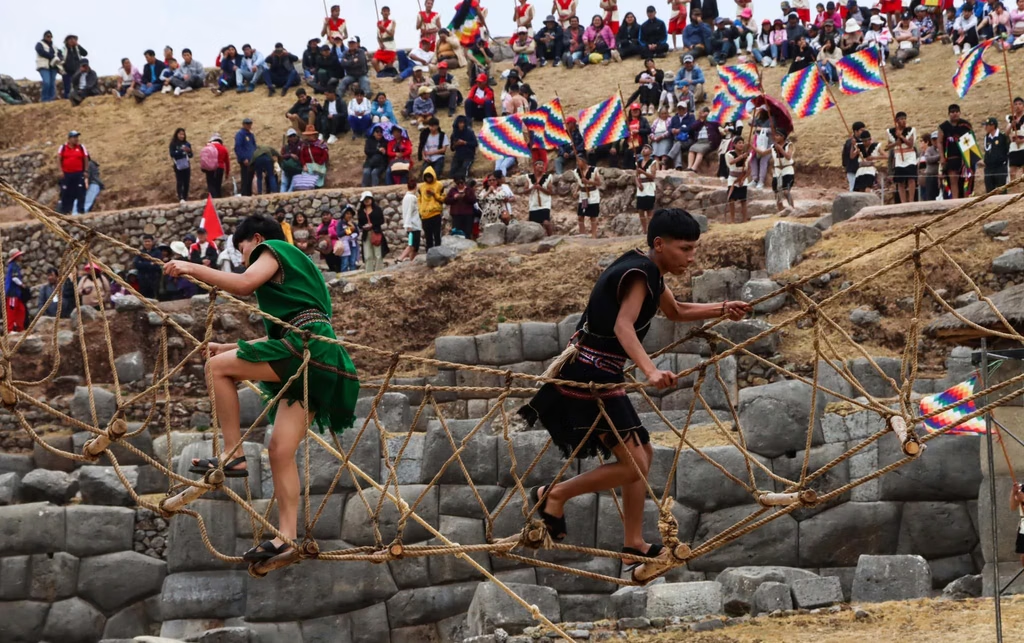
Contemporary Staging at Sacsayhuamán
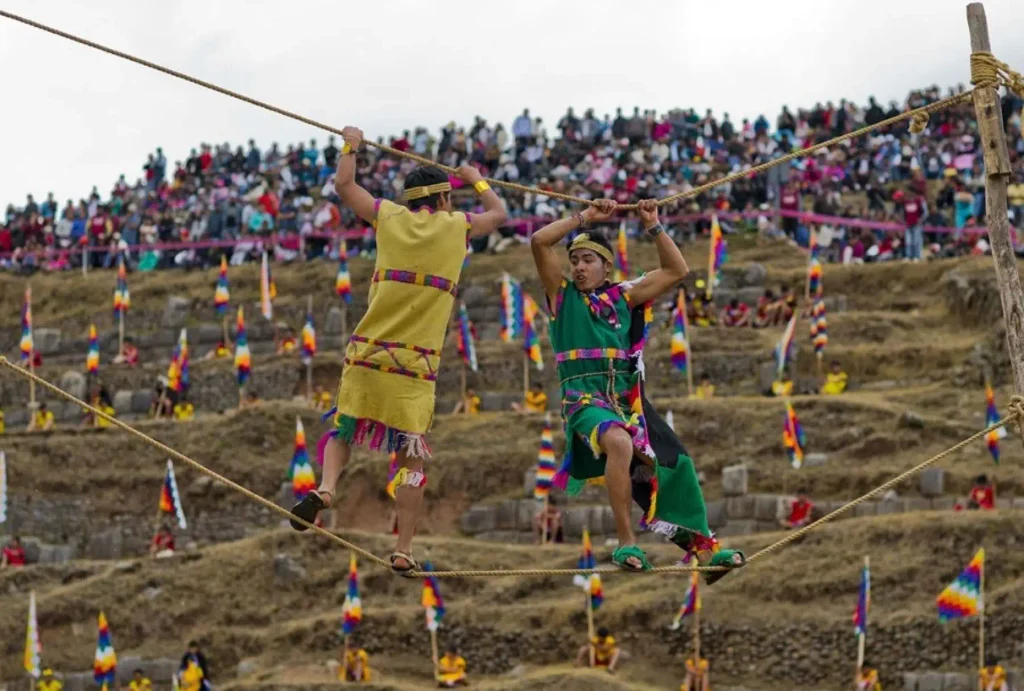
Today, this pre-Hispanic tradition is honored through a monumental annual reenactment held on the esplanade of the Sacsayhuamán archaeological park, organized by the Colegio Nacional de Ciencias del Cusco.
Cultural authorities emphasize that this event is a historical and educational performance inspired by colonial chronicles, distinct from the original ritual practices that were interrupted during the conquest.